Can you get hired at a job fair? You can if you follow these tips.
Photo by Filip Bunkens
I've been to many career fairs, both as a job seeker and as a speaker and advisor.
When looking for a job, I would typically come to the fair early in the event, dressed well and holding a binder or folder with resume copies. Once inside, I'd scan the room (or fair map) to decide which companies to visit. Then I'd head first to whichever company stand had the shortest line of waiting job seekers.
I came more or less prepared, yes, but too often I arrived with the wrong mindset: I basically treated the fair as a simple item to check off on my job search to-do list.
Instead of aiming to really push my job search forward, I would ultimately just go through the motions of handing out all the resumes I brought with me, trying to get it all over with and get out of there as soon as possible, without truly taking advantage of what was going on around me.
Sound familiar?
The main reason why job fairs are good for jumpstarting your job search is for meeting company reps, but they can do so much more IF you know how to take advantage of everything they have to offer.
Here's a list of 35 job fair do's and don'ts for success at your next fair.
Note: There is a poll embedded within this post, please visit the site to participate in this post's poll.
Do fill in an online application form in advance if the career fair organizers requested that you do so.
Do dress professionally. For guys, that means ironed shirt and pants, possibly even a jacket and tie. For girls, that's a pressed skirt or pantsuit with sleeves and necklines that are conservative.
Don't wear jeans or flashy jewelry.
Do have many copies of your resume with you to distribute. Needless to say but I'll say it anyway, make sure the resume is up-to-date. Bring a work portfolio too in case of snap interviews.
Don't give out rumpled copies or anything less than crisp CVs, which is why I usually brought a folder or binder.
Do come with note-taking gear – a smartphone, or a day planner and pen. If a recruiter offers you a meeting or interview, immediately update your agenda with the date and time in front of that person, which builds your credibility and makes you look professional.
Don't try to commit that information to memory and risk forgetting it, which would be very unprofessional.
Do have a small backpack or briefcase to hold any business cards, flyers or swag that companies give you.
Don't carry about a plastic bag from a local supermarket with your resumes inside. You'd be surprised.
Do prepare in advance and have clear goals for the job fair. If you know which companies will be at the fair, research them by visiting their websites and seeing if they have any open positions that interest you. If so, learn about the business and be ready to answer questions when you meet their representatives.
Don't make unrealistic goals. Walking out of the fair with a job contract in hand would be one of them. Even interview invites are often unlikely, but it is realistic to get hiring manager contact information that you can act on later.
Do make a sales pitch for yourself, also called an elevator pitch: a 30-second infomercial about you. Practice saying it to other people. When you're comfortable enough, you'll get the hang of tweaking it on the fly as you discuss yourself with other career fair attendees.
Don't wait until the last minute to do follow these pre-job fair tips but even that is better than not preparing at all.
During the job fair
Do arrive early to take some time to develop a plan of action for your time at the fair.
Don't bring up the fact that you arrived late if it happens.
Don't interrupt other people when they're talking at company booths.
Do look directly at recruiters and listen to them.
Don't answer your cellphone when talking to any company representatives.
Do smile, be friendly and try to relax. Bring a friend if it will help break the ice and make it easier for you to approach the company tables.
Don't come to the fair and expect that people will approach you or call out at you like in the shuk (Israeli marketplace, or bazaar).
Do take note of whom you submitted resumes to, for following up later.
Don't give out your resumes to uninterested companies just for the sake of doing so. You may run out of resumes sooner than you think.
Do request business cards. Write down who you met and where on the back of each business card you receive, and in front of the giver. If they have none, ask for their contact information and note it.
Don't just stuff the business card in your pocket as if you're doing the giver a favor by taking it from her.
Do visit companies that you are unfamiliar with e.g. because you didn't know they'd be at the fair. If their representative asks, give them that reason and say that you normally would have researched them otherwise.
Don't pretend that you know their business. They'll notice sooner than you realize.
Do ask when is best to contact the company after the fair and write it down.
Don't ask and then forget or otherwise miss that contact deadline.
Do stop and reflect midway through the fair. Have you accomplished any of your goals? If not, what do you need to change before the fair ends? Otherwise, what's left to be done?
After the job fair
Dofollow up any job opportunities that you discovered at the fair. Email is good, telephone is better.
Don't call during lunch hour or any other inconvenient moment.
Do send thank you letters with copies of your CV, especially if you ran out of CVs during the fair.
Don't pester these new contacts or be too insisting and appear desperate. Be courteous of the recruiter's time.
Do take a look back at your performance. Did you reach all of your goals? What did you do well? Where could you improve for next time?
Don't browbeat yourself. Everyone has bad days. What's important is to learn from your mistakes. Behind every success story is a list of failures.
It can be easy to have a successful job fair if you take the time to prepare for it and act professionally throughout. You'll leave a good impression and might even find your dream job.
Question of the article
Which job fair tips have worked well for you in the past? What new ones will you need to try next time? Tell us in the comments.
Have you heard it lately? Ask just about anywhere how to apply for a job there, and you will hear, “You have to apply online. If they are interested in your application, they will call you.”
And some people say that applying for jobs online doesn't work. Why? Because online job application puts all of the power in the hands of the employer—and it cuts down the time and money needed to handle job applicants, because employees don't see most of the applications.
You see, when you fill out the online job application, your application enters a database of applications, also called an applicant tracking system (ATS), other times called “the resume black hole.”
How many times have you heard of people filling out dozens or even hundreds of online applications without even getting one response back?
Automated systems sort and process the applications. If your application isn’t processed and brought to the top of the list of applications, it simply won’t even be reviewed by human beings.
Note: There is a poll embedded within this post, please visit the site to participate in this post's poll.
How to get through the automated filters
So the question is–what do you need to get to the top of the automated list, and get past the autobot filters designed to weed out applicants before HR or anyone else needs to spend any time on it?
You will need three things:
Use exact keywords and phrases
Find job openings that closely match your skills and abilities
And… a system that works in reverse—a system that only has you apply for a job after you have gotten the response. Yes, you heard me right. To succeed with the online job application, you need only apply for the jobs that you already have a response for.
The experts and gurus will tell you that you need to apply for a lot of jobs. The logic is: the chances of getting a job goes up with every application you submit. But I don't buy it. You spend hours getting the resume and application just right. You fight with the submission process, then you wait. And for what? Intense silence on the other side.
Your hopes are actually dashed with every online resume that you fill out. You can't hold out real expectations when you haven't had a response from the last 35 applications you have submitted, now can you?
Then pretty soon you are looking for ways how to fill out job applications out faster. You are cutting corners sending the same resume to every offer, leaving every field blank that isn't expressly required. But what will an employer see if they actually do look at that application? Someone who can't even complete a whole form? Will that application actually help your chances of getting hired, or would it just hurt them?
What would your chances of being hired actually be like if you knew your application would be reviewed by a real person? How much more time and detail could you put into the application, and how much better would it be?
Contemplate those questions while we address the other two things that you need to get your resume seen by real people.
1) Use exact keywords and phrases
If you don’t have the exact keywords and phrases that the automated system is looking for, your application will fail. It is that simple. For an example, I will assume most everyone has done a Google search before. In the Google search window, a person will type in a search term and Google will deliver a list of possible sites that relate to the term that you typed in. Although the algorithms are different, the automated applicant tracking systems have, at their heart, the very same mechanisms and return to the employer’s agent, the HR person or company recruiter, a list of applications that have all of the specific keywords and phrases that they are looking for.
The irony here is that many people will have the experience and prerequisites expected, but will not be in this list of top qualified candidates because the automated systems just won’t find their application.
Use the job description to get the exact keywords that are being searched for.
2) Find job openings that closely match your skills and abilities
As was pointed out, the automated systems are looking for specific keywords and phrases, it is easiest to match those keywords when you are applying for jobs that you really do qualify for. But, where do you find those perfect jobs that you are looking for?
Finding the right jobs requires knowing where to look, and how to get the right help finding the job opportunities. It is estimated that the big job boards such as Monster, CareerBuilder, and etc. only account for 4 to 8 percent of all hires in the US. What that means is that the majority of the jobs available are not on the big job boards. You can learn exactly where to look for the right jobs, and how to access the “hidden job market” where the competition is significantly less, and odds are much greater in your favor for getting hired.
The secret is in networking and the right tactics to find the people inside that are influencers and can help you.
Finding just the right job opportunities will cut down the frustration factors immensely and actually improve your chances of interviews and job offers.
3) Only apply for the jobs that you already have a response from
The process that works is actually the reverse of the common logic. Don't apply until someone there is expecting your application.
Most people think that online job application means that you can’t contact the company, and that there won’t be any human interaction until you win the job application lottery and your name is chosen. Frankly, this attitude keeps most people from making the short list at the companies that they are interested in. If you have the first two things mentioned above, then you need to let a real person know it.
Companies often hire people who are a known entity. They are friends of someone in the company, or have worked with someone in the past. This is where the saying comes from, “who you know matters more that what you know”
No place is that more evident than when it comes to getting hired. As it turns out, knowing who to contact and how to contact them is a key component to becoming that known entity, and gaining a foot up on your competition.
Most people go about contacting someone in the company in a completely wrong way. They hear this phrase again and again, “if they choose your resume, you will get a phone call from them.” That is usually the last thing anyone hears from the potential employer’s company. Finding the right people to contact and contacting them in the right way will make a big difference with the employer interest in your online job application.
The real problems of today’s job search happen to be in the new online job application process and all of the baggage that it introduces, rather than in the lack of jobs or the current economic conditions.
The prevailing system for getting hired simply doesn't work. When you reverse that equation and start by contacting someone at the company, you can start seeing results immediately.
Twenty one years as a Project Manager gave Dean Giles a lot of experience on the interviewing and hiring end of the job market. One company acquisition and a subsequent reduction-in-force, put him on the opposite end of that equation. He quickly found that the automated online job application mechanisms had pretty much high-jacked the hiring processes. He found that the hiring process for most people is completely broken and that what he had learned over 21 years had to be applied in new and creative ways. Dean now strives to help people find employment and use the new technologies to their advantage.
WebHostingBuzz is a reliable web hosting company with the servers hosted at multiple US and Europe locations and over 30,000 happy customers worldwide.
Subscribe to JobMob via RSS or email and follow me on Twitterfor more great insight on filling out job applications online.
These are the computer skills most in demand right now.
Photo by Jesus Kiteque
It used to be that unless you were a software engineer, some kind of designer or in telecommunications, computer literacy meant you were familiar with the basic parts of Microsoft Office: Word, Excel and perhaps PowerPoint.
All that's changed.
Today, almost no one asks about basic computer skills. You had just better have them once you finish school.
Instead, every profession now has specific software tools and platforms that are critical to doing a job well, which is why recruiters require them in job openings, and which is why you need to have them on your resume.
Whether you're considering a new industry or looking to make yourself a better candidate, use this list to learn what you need to learn, both in specific software skills and types of software because companies will often require experience with a given tool “or tools like it.”
Here are top requested software skills in demand by industry in 2018, according to job listings on Indeed.com in the United States.
Computer skills in demand by industry in 2018
Just scroll down to find your industry, or leave a comment to ask for it to be added.
HR and recruiting software tends to be a platform or package that does everything such as tracking applicants, managing payroll, employee databases, evaluations and more.
The list was compiled by drawing up a list of suggestions from people in industry forums on Reddit, skills surveys, business software directories such as Capterra and of course, from job listings on Indeed.com.
A skill was then added to the list if it appears in at least 100 open jobs on Indeed, although most of the listed skills appear in over 1,000 open jobs as of right now.
As the list is meant to be of the software skills most in demand for the above industries, don't use it as an exhaustive list of what's needed by everyone in that industry.
Far from it.
There are many jobs that only require some of the listed skills for that industry, and there are more software tools and packages that didn't make the list because they don't appear in enough Indeed.com job openings, which means they aren't in high enough demand.
This list is also not comprehensive. It's 100% certain that there are other highly-in-demand skills that didn't get included simply because I didn't hear about them, but feel free to suggest more in the comments below and I'll check if they should be added.
The list isn't perfect. Indeed's search engine doesn't make it easy to distinguish a skill's demand in one industry when it's in demand in multiple industries. Also, sometimes a software package can be labeled as both e.g. a CRM and a Marketing Automation tool, but to keep the list readable, I had to choose a sub-category in each case.
Wherever parts of Microsoft Office appear and reappear, it's because intermediate or advanced level knowledge is required.
How can you make sure that your business card is the most effective tool that it can be? By avoiding these errors.
Note: There is a poll embedded within this post, please visit the site to participate in this post's poll.
Business card blunders you don't want to make
1) Vague personal branding
Someone reading your card should immediately be able to tell what kind of work you do.
2) Unsuitable business card style
If you are in a conservative industry, such as law or finance, you'll want a simple white business card with black ink, raised lettering, and very little, if any, color. If you are a graphic designer, though, you may want something more creative.
3) Personal logo abuse
If you have a personal logo on your resume, it should be on your business cards – everything should match.
However, don't make the logo over-sized. Keep it understated, so that you have room for your contact information and don't need to print your phone number and address in print so tiny that your contact with need a magnifying glass to read it.
4) Putting a photo of yourself on your business card
Unless you are an actor or are trying to get a job as a network news anchor, or are in some other business where your face is part of what you are trying to sell. Otherwise, the photo just makes the card look schmaltzy.
5) Gimmicks
Don't add a gimmick to your card without a good reason.
These days, everyone wants to stand out by producing a business card that is different and unique (like one that uses augmented reality). But when it comes to business cards, unless you have a special, business-related reason for making your business card different (i.e., you are a professional magician and your business card is embedded with a hologram), a traditional card is best.
Why?
Ultimately a business card is a tool – it's meant to provide information that you hope will end up in someone's rolodex (or the equivalent).
Don't let your desire to make your card different pull you away from the purpose of a business card.
6) Non-traditional sizes or formats
I've heard of people handing out chocolate business cards.
Kudos for creativity, but do you think a chocolate card is going in the rolodex? My guess is that it will become a mid-afternoon snack!
Cards in various non-traditional sizes are also unlikely to make it into a rolodex – they just don't fit. Do you want to force your new contact to copy your information onto a rolodex card?
The one exception to this rule is the folding business card, which is the traditional size when it is folded.
7) Leaving off important contact information
I realize that privacy is important, but make sure that your business card contains all the potential ways that a contact might want to try to reach you.
Don't limit your contact information to an address and phone number. Include your email address, your IM/Skype handle, your website, and any social media contact information (such as Twitter and Facebook usernames) that a contact might want to use to reach or find out more about you.
8) Making important contact information too hard to read
Use a readable font that is printed in as large a size as you can reasonably fit on the card.
Don't make your visual elements so large that you don't have room to add legible text.
9) Making important contact information too hard to find
Your contact may never look at the back of your card – if you must put something there, make it your personal logo, an inspirational quotation, a testimonial or two, or something else appropriate to your profession or industry.
For example, if you are a chef, you might be able to put a very simple menu or recipe on the back of a card.
10) Handwriting changes of contact information on old cards
Make sure you have new ones with the new information clearly noted. Otherwise, you create the impression that you are someone who tends to procrastinate – even about updating your own business cards!
11) Forgetting your business cards at home
If you are not used to carrying a business card, this may be the biggest obstacle you have to overcome.
Get yourself a nice business card case to hold your cards and put it next to your wallet and keys, or in your briefcase or bag, so that you won't forget to bring your cards along to your next networking event, job fair or professional conference.
12) Keeping business cards in your wallet
Cards in a wallet tend to get rumpled and smudged, and there is always the chance that you'll drop the contents of your wallet all over the floor while struggling to extricate a business card that got wedged behind your driver's license. That won't make a smooth impression.
13) Choosing the wrong situation to give out a card
Be sensitive about when you choose to give out your business card.
Of course, do give your card to anyone who asks for it, to anyone who requests your contact information, or to anyone who asks for information about your profession or industry.
Equally obviously, don't give out your card at funerals or weddings, meetings with your child's teachers (unless you are specifically asked e.g. by a teacher who wants you to be a volunteer speaker for the class), at doctor's appointments, or in any other potentially uncomfortable situation.
You must also be sensitive to the kind of interest that is expressed in social situations – someone who asks you at a party what you do is better responded to conversationally, not by digging out your business card.
In fact, as a general rule, don't give out your business card in personal social situations unless you are asked for it, but do feel free to give out your card at professional conferences and networking events.
14) Choosing the wrong time to give out a card
Don't give your card at the beginning of a meeting or event. This is one of those subtle things, but it is important. It gives the impression of arrogance if you toss a card at someone you've just met.
If you at least wait to exchange cards until you've spent some time together, it will feel more natural, as if you're giving a new friend a way to reach you rather than trying to make a sales pitch (and while we are on the subject – never, ever, make a sales pitch while handing someone your business card).
Handing out business cards is a delicate situation – one that requires a good grasp of the finer points of business etiquette. If you feel totally at sea, don't hesitate to take a class or read a good book on business etiquette to help you to get a feel for it. It's well worth your time to do so.
15) Being culturally insensitive with your cards
In some cultures, it matters what hand you use to give out business cards – always use your right hand, if you are using just one hand. However, in Asian cultures, it is polite to use both hands to present your business card.
If you are meeting potential employers or contacts in an international context, look up the guidelines for presenting and receiving business cards in the country where you will be.
If you will be spending time in a country where the dominant language is not your own, have your business cards printed double-sided, with one language on one side and one on the other.
16) Giving out cards wildly
It is important to not paper the community with your business cards. You are better off handing out cards to a few quality contacts who really plan to get in touch with you again, than giving them out willy-nilly to many people you have just met, who may have no real interest in contacting you again in the future.
17) Being stingy with your cards
Yet- if you are in a group of people, and are offering your business card to one person, offer it to the entire group. Otherwise, the other people in the group may feel deliberately excluded.
18) Not handing out your cards at all
Amazingly enough, many people order business cards, and end up with a professional, beautifully printed card that they keep in their briefcase or on a shelf. What a waste of money – and of a potential marketing tool! No business card is going to end up in a contact's rolodex if you don't hand that card out at every opportunity.
19) Forgetting to get the card from the person to whom you just gave yours
If you don't ask for a card from someone who has just asked for yours, you give the impression that you are not as interested in this person as he or she is in you.
20) Writing on the business card that was just handed to you
It will seem as though you are defacing their card. Treat all business cards, including your own, as though they are pieces of gold.
If you face a situation where the only paper on which to write is a contact's card or your own, write on the back of one of your own cards.
21) Giving out business cards with wrong information
Nailed it:
Bonus tip!
Give close friends and colleagues several of your business cards, which they can then use to refer people to you.
About the author
Bill Post, Small Business Research Analyst, has been providing research on issues of concern to small businesses for 123Print.com Business Card Design for three years. A former business owner prior to his involvement with 123Print Custom Business Cards, Bill spent several years after receiving his degree in the fast-paced corporate world before going out on his own to provide marketing and branding services to other small businesses in the Washington, DC metro area.
JobMob was officially launched 11 years ago today.
Photo by Brooke Lark
11 years. Wow.
Back on March 21st, 2007, I was just trying to learn about blogging while looking for a job in Israel.
If you had told me I'd be blogging 11 years later, I would never have believed you. I didn't even like writing back then!
It's been a long journey with many ups and downs (thankfully, more of the former) and a lot of fun.
Many other job search and career blogs have come and gone, but I feel good that we'll be right back celebrating birthday #12 a year from now. Job seekers are still job seeking, and I still have a lot to share (pun intended).
Here are some of the highlights of the past year.
New baby
I'll start off with a personal highlight – my son Yoav was born just over a month ago.
If you've been following JobMob for a few years, you might notice that Yoav was born just over two years after my wife miscarried. That fact had us a little more worried than usual throughout the pregnancy, and the related extra attention from doctors wasn't always a relief either, even if they were doing it for the best.
Thankfully, the pregnancy went very well and Yoav is completely healthy and everyone at home can't get enough of him.
JobMob 3.0
This past fall, I quietly upgraded JobMob to a customized version of Thrive Themes‘ Rise theme.
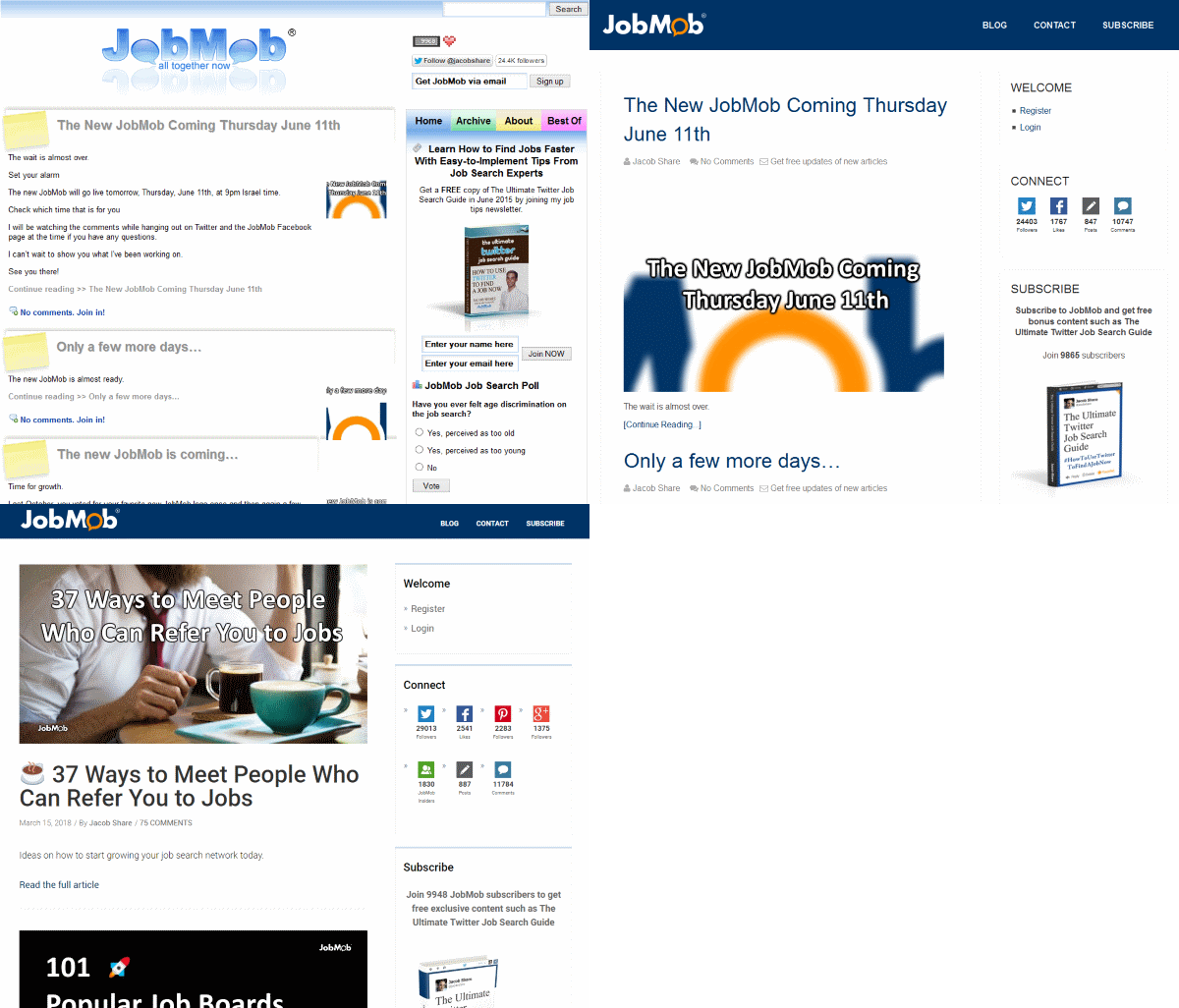
The new theme is faster, more lightweight, scales better on smaller screens and provides a number of behind-the-scenes features that make blogging easier.
Check out the evolution of JobMob over the years:
Animation by ezgif.com
The JobMob Insider program continues to grow
What began as an under-the-radar experiment a few years ago has blossomed into a program with more than 1,800 members.
The free JobMob Insider program gives you access to exclusive job search resources, downloads, PDF versions of articles, and more.
For example, I've recently begun doing video Q&A sessions for members.
Stay in touch where it's easiest for you. Subscribe to JobMob for the best job search advice from someone who actually cares about your job search success.
via JobMob More Information Here..
The key question to ask is not “what can you do for me?” but rather “what can I do for you?” The more you give to your network, the more you can get from it.
Find a 3-4 word phrase that relates to who you are professionally and puts you in a positive light. You want people to think that phrase when they hear your name, and everything you do work-wise should match your tagline.
Use it in your email signature and begin by saying it when people ask what you do. Get ideas by seeing how people describe you in recommendations or reference letters.
In only 30 seconds, you need to be able to describe who you are and which problems your expertise can solve. Practice until it comes naturally. Tweak as you go, judging by listener response.
LinkedIn will also give you a short, easy-to-remember vanity url to put in your email signature, on your resume and business cards, encouraging people to connect with you. Use your above personal tagline and job search email address.
Being a LinkedIn Open Networker makes it easier to grow your number of LinkedIn connections to the top level of “500+” but the looseness of these connections means you shouldn't expect much from them. Still, all it takes is one good connection for this to be worthwhile.
Take a few moments to flesh out your profile, putting your personal tagline in the Bio box and customizing the background image. Discover more people to follow by browsing the who your friends and industry influencers follow.
Use Facebook for more than staying in touch with friends and family. A 2017 survey conducted for Facebook claims that “one in four people in the US said they searched for, or found a job using Facebook.”
The way how to network for a job on Facebook is separately from your personal profile, use a Facebook Page to promote yourself professionally, giving Facebook users a place to follow you as an expert in your field. Then, interact in Facebook groups and on other relevant pages while posting as your Page instead of your personal account.
Have business cards with your personal tagline and contact information to give out to potential business contacts. Try to always leave a note on the back before handing over your card. For example, write where you met the recipient (for them to remember later). I use and recommend Zazzle business cards.
10. Ask for referrals when handing over business cards
People are more likely to respond about job leads at other companies than if you ask directly about open positions in their company. Give them extra cards if they have any potential referrals to put you in contact with.
Calling cards are for non-business occasions. They're like a business card, but with personal information. The novelty aspect alone will leave a good impression.
12. Join real-world business networks and chambers of commerce
You want people in your industry to notice you. Find local networks by googling “business network” and the name of your city.
13. Join general purpose business social networks
Besides LinkedIn, there are other networks such as Xing and Viadeo. Use the one that is most popular in your local industry.
14. Join industry-specific social networks
In many cases, these are business social networks created on the Ning platform. Use Ning's search to find relevant networks or start a Ning network yourself.
15. Start blogging about your profession
Blogging is a terrific way to not only grow your network and show off your expertise while helping others, but also to attract job offers.
16. Follow industry blogs
Both big and small, subscribe and comment on them so that their bloggers discover and interact with you, especially if you have your own blog too. It's better to get a lot of attention from 10 small blogs than no attention on 2 big ones. And a good way to find and follow them is using my.alltop.com (hat tip to Jeff Gillis for that idea)
#ProTip leaving a comment on a blog post is generally not an effective way to apply for a job.
17. Participate in industry discussion forums and mailing lists
Become the expert that people want to hear from on the topics you specialize in.
18. Become a member of professional associations
Every market has a group of people who are creating the standards and organizing member professionals. Being part of such groups can net you recognition from across the industry.
19. Create an industry newsletter
Become a trusted source of information. Create a newsletter for an industry niche that doesn't have one. Or, become a contributor to an existing newsletter, with a byline explaining how to reach out to you.
20. Go to industry conferences
Once there, make time to meet people and exchange business cards. Conferences are also a great time to finally meet people face-to-face after having met online.
Have lots of business cards with you and a polished elevator pitch.
22. Organize informal industry events
Coordinate your own launch parties, anniversaries, expert speakers, you name it.
If you choose the right type of event and promote it well, the success will carry over to your personal network and people will want you to do it all again so that they can bring along other contacts who missed out.
23. Bring friends along
Whatever kind of event you attend, go with friends. Split up to network separately and later compare notes.
24. Join a job search support club
Also called job clubs or job search clubs or groups. Network with like-minded people. Commiserating is a great conversation starter.
25. Volunteer
Meeting new people is one of the best reasons why job seekers should volunteer. If there aren't many opportunities locally through e.g. religious institutions or NGOs, find them online using a site like Idealist.org.
One of the new kittens at my volunteer job name is Brutus and Id liked to high five whoever is in charge of naming at the animal shelter
A great place to network with people across different industries and positions, there are also many other reasons job seekers should exercise regularly. Here are 10 reasons to work out on your job search and here are 10 more reasons.
27. Get a coach
Among the many benefits of having a job search coach or a career coach: they'll be able to guide you to even more ways to grow your network.
This is a great way to get your foot in the door, and you'd be surprised how often an info interview can lead to a job, even in a different department or company.
30. Email friends and family
Get help from people who want to help you by default. Ask them to put you in contact with anyone that can help your job search.
Mention the bounty in an email to your personal contacts, and ask them to forward your message to relevant contacts of their own, for whom the cash prize could be a big motivator.
33. Join an alumni / veterans' jobs network
Placing alumni in jobs is usually a major goal of university or college alumni networks and also military veterans' associations.
34. Send updates to your contacts
If they don't hear from you, they'll just assume you found a job, so nudge people in your network from time to time. A simple “any way I can help?” is a great way to stay in touch and not be forgotten.
Whether to confirm a referral or send over a link to an article you discussed, find a good reason to follow up with new contacts before they forget about you, which is usually within 24-48 hours.
37. Use thank you notes
Always take the time necessary to appreciate the people in your network. Just because people are happy to help doesn't mean you should take their help for granted. Handwritten thank you notes, perhaps on a postcard, will stand out more than a quick email but even that will still be noticed in a positive way.
The top job boards that job seekers and recruiters are using around the world.
Photo by NASA
Job boards are one of the most misused tools in a job seeker's toolbox.
The worst way to use a job board is the easiest way: just jump right in and start applying to the first jobs you qualify for. That short term gain often leads to long term pain as you're competing with many other job seekers for a job at a company you may ultimately not even want to work for.
On the other hand, the best way to use a job board is as a research tool to gauge demand for your current skills and which employer-attracting skills to learn next. Then, target companies directly, away from the job board.
The larger the job board, the better it will represent your industry's job market, the better an impression of market demand it will give you.
With that in mind, here are many of the biggest, most popular job boards around the world. Browse the list, enjoying some of the job board logos while you're at it, or simply look for your country or ‘international' and start researching.
Note: There is a poll embedded within this post, please visit the site to participate in this post's poll.
The top job boards around the world
#101 Neuvoo Greece (Greece) – Looking for a job? You will find on neuvoo all the jobs available in your region. Your job search starts here.
#100 All Cruise Jobs (Germany/International) – All Cruise Jobs is the biggest job board within the cruise line industry with most current cruise ship job vacancies available on the Internet.
#99 Aviation Job Search (International) – Check out Aviation Job Search for 1000s of the latest aviation jobs and vacancies.
#98 TipTopJob (International) – Search for Jobs in the UK and Worldwide
#97 Observer Jobs (Sri Lanka) – Observer JOBS is the only recruitment product that brings together print, web, mobile and social media to create a comprehensive, easy to access employment network with the largest database of job opportunities and the widest coverage of all districts in Sri Lanka
#96 employment4students (International) – Most visited UK student jobs website helping students find part time jobs, temporary job vacancies, internships & graduate jobs during Christmas & Summer
#95 Neuvoo UAE (UAE) – Looking for a job? You will find on neuvoo all the jobs available in your region. Your job search starts here.
#94 Neuvoo Switzerland (Switzerland) – Looking for a job? You will find on neuvoo all the jobs available in your region. Your job search starts here.
#93 GovJersey (Jersey, Channel Islands) – Search for jobs and current vacancies in Jersey, Channel Islands.
#92 Brighter Monday Tanzania (Tanzania) – Find the job that's right for you. Search for jobs, read career advice and sign up to receive alerts on the latest job vacancies.
#91 Neuvoo Spain (Spain) – Looking for a job? You will find on neuvoo all the jobs available in your region. Your job search starts here.
#89 Job Monkey (International) – The coolest jobs on Earth
#88 Brighter Monday Uganda (Uganda) – Find the job that's right for you. Search for jobs, read career advice and sign up to receive alerts on the latest job vacancies.
#87 JobbSafari (Sweden) – Find your next job or your next coworker with Jobbsafari. Jobbsafari offers the most complete list of available jobs in Sweden.
#86 Neuvoo UK (UK) – Looking for a job? You will find on neuvoo all the jobs available in your region. Your job search starts here.
#85 Eluta (Canada) – Official job search engine of the Canada's Top 100 Employers® project
#84 Neuvoo Brazil (Brazil) – Looking for a job? You will find on neuvoo all the jobs available in your region. Your job search starts here.
#83 The Local Spain (Spain) – English-Language Jobs in Spain
#82 Trinidad Job (Trinidad and Tobago) – Welcome to the #1 Recruitment website in Trinidad & Tobago – Dedicated to Jobs in Trinidad and Tobago
#81 Rice Bowl (Malaysia) – Find Latest Job Vacancy in Malaysia & Singapore. Thousand of Latest 2017 Job Vacancies Available in Selangor, Kuala Lumpur, Johor, Penang & Perak. Start Job Vacancy Search in Admin, Account, HR, Clerical & Sales and Marketing. Thousand of Employment Opportunities eg Part Time Jobs, Full Time Jobs, Internship Opportunity & Freelance Jobs. – RiceBowl.my
#80 Neuvoo Nigeria (Nigeria) – Looking for a job? You will find on neuvoo all the jobs available in your region. Your job search starts here.
#79 StepStone Austria (Austria) – StepStone Austria is one of the leading and most visited online job boards in Austria.
#77 Neuvoo South Africa (South Africa) – Looking for a job? You will find on neuvoo all the jobs available in your region. Your job search starts here.
#76 Queensland Government (Queensland, Australia) – Job search | Employment and jobs | Queensland Government
#75 The Local Italy (Italy) – English-Language Jobs in Italy
#74 CharityJob (UK) – The only job board specifically created for charity, not for profit, third sector and voluntary jobs. Find the largest range of jobs available in the charity sector today!
#73 S1Jobs (Scotland) – Search 4,047 jobs in Scotland
#72 Australian Government (Australia) – Find Jobs, Employment & Career Opportunities
#71 Europe Language Jobs (Europe) – Europe Language Jobs is an exciting job board specialized in multilingual job vacancies.
#70 Academic Positions (Europe) – Career network for academics, researchers and scientists. Find and apply for jobs in research and higher education today!
#69 Virtual Vocations (USA) – All telecommute jobs. All in one place.
#67 Milk Round (UK/USA/UAE/Germany/China) – The UK's most widely used student and graduate job website. Search and apply for the latest graduate jobs, schemes and internships from top UK employers today.
#66 StepStone Belgium (Belgium) – Find a job in Belgium and use the Belgian StepStone job site. All jobs in Belgium, just one click away!
#65 Fish4Jobs (UK) – Looking for the best local jobs? Start your local job search on Fish4jobs, the official job site of Trinity Mirror’s network of regional and national news brands including the Daily Mirror, Manchester Evening News, Liverpool Echo, Birmingham Mail and many more.
#64 StepStone France (France) – StepStone is the number one job board in Europe and the number one Specialized Jobboard network in France.
#63 Neuvoo France (France) – Looking for a job? You will find on neuvoo all the jobs available in your region. Your job search starts here.
#61 Science Careers (USA) – Search for your next job from 1,836 live job openings, or upload your resume now and let employers find you.
#60 Mero Job (Nepal) – Find most recent jobs in Nepal at merojob.com. We are an online job search site in Nepal where you can find career opportunities suitable for everyone.
#59 Jobillico (Canada) – Everyone deserves to be happy at work. So do you!
#58 Neuvoo Canada (Canada) – Looking for a job? You will find on neuvoo all the jobs available in your region. Your job search starts here.
#57 Neuvoo Italy (Italy) – Looking for a job? You will find on neuvoo all the jobs available in your region. Your job search starts here.
#54 Neuvoo India (India) – Looking for a job? You will find on neuvoo all the jobs available in your region. Your job search starts here.
#53 Irish Jobs (Ireland) – Irish job opportunities in Dublin, Cork and Galway from IrishJobs.ie – View our Irish Salary Survey, Career Advice, Jobs in Ireland plus much more.
#52 Jobs.ie (Ireland) – Find jobs in Ireland. View thousands of jobs from Ireland’s top companies. Search jobs in Dublin, Cork and Galway. Get CV tips and more in our blog.
#51 NIjobs (Ireland) – NIJobs is Northern Ireland's leading job site, listing thousands of jobs from employers and recruitment agencies throughout NI.
#49 Oil and Gas Job Search (International) – Search thousands of Oil and Gas jobs. We cover all oil jobs, offshore jobs, oil careers and offer recruiter services to employers in the oil and gas industry.
#48 Caterer Global (International) – Search for your next job from live vacancies, or upload your CV now and let recruiters find you.
#47 WayUp (International) – Find paid internships, part-time jobs and entry-level opportunities at thousands of startups and Fortune 500s. Use our resources for tips on interviews, resumes, cover letters and more.
#45 OnlineJobs Ph (Philippines) – World's largest and safest marketplace for finding rock star Filipino workers.
#44 Jobberman (Nigeria) – Your Dream Job in Nigeria Awaits.
#43 Caribbean Jobs (Caribbean/International) – Find your dream job in the Caribbean at Caribbeanjobs.com. Full-time and part-time jobs in Trinidad, Jamaica, Barbados, St. Lucia and more. Your best source online for a career in the Caribbean.
#42 JobIndex (Denmark) – Jobindex is Denmark's largest job market. We provide the most complete overview of available jobs in Denmark. With over 20,000 job ads, 100,000 CVs * and over 800,000 unique users a month, Jobindex is Denmark's largest job market.
#41 WorkAbroad (Philippines/International) – The Leading Overseas Jobs in the Philippines
#40 Just Landed (International) – Everything you need to live abroad – connecting expats worldwide.
#39 Career Junction (South Africa) – 1000's of new jobs daily. Job seekers can upload CVs and apply for Jobs on mobile or desktop. Search jobs by industry, location, keyword or job title.
#38 Workopolis (Canada) – Your next job or career is on Workopolis – Canada's leading career site with the latest jobs from Top Canadian employers. Let's get to work!
#37 Jobs.ac.uk (UK) – Search international jobs in academic, science, research and administrative employment in the UK, Europe, Australasia, Africa, America and Asia & Middle East.
#36 Careers24 (South Africa) – Find your dream career
#35 NHS Jobs (UK) – Around 25,000 posts are advertised on this website every month. If you're looking to begin or develop your career in the NHS, this site should be your first port of call.
#34 Monster Gulf (International, Bahrain, Gulf, Jordan, Kuwait, Lebanon, Oman, Qatar, Saudi Arabia, Egypt) – Search for jobs in UAE including government jobs, safety officer jobs etc. on Monster Gulf. Post your resume to apply for UAE jobs across top companies in UAE.
#33 Monster Canada (Canada) – Find the job that's right for you. Use Monster's resources to create a killer resume, search for jobs, prepare for interviews, and launch your career.
#32 Jobs.af (Afghanistan) – Get the latest job announcements in Afghanistan by UN, Government, International development agencies, Aid Agencies, Private Companies, MNCs in different industries
#31 Jobs2Careers (USA) – What type of work are you looking for?
#30 Internships.com (USA) – Find internships and employment opportunities in the largest internship marketplace. Search paid internships and part time jobs to help start your career.
#29 HigherEdJobs (International) – Your Higher Education Job is Here.
#28 Gulf Talent (UAE) – Search from 4,000+ jobs in UAE, Qatar, Saudi Arabia, Oman, Bahrain, Kuwait, Jordan and Lebanon. Search jobs by location, job role and industry. Start searching!
#27 JobStreet Ph (Philippines) – 62,564 jobs in the Philippines and Overseas
#26 Monster UK (UK) – Monster will help you find the job that you deserve! Use Monster's resources to create a killer CV, search for jobs, prepare for interviews, and launch your career.
#25 Neuvoo (International) – Looking for a job? You will find on neuvoo all the jobs available in your region. Your job search starts here.
PSA: If you're applying for a job on a job board and it's your first communication with a company take your address out of your resume. Once you verify the company is real and have been to the company then feel free to give them your address. There's a lot of fraud happening.
#24 Pnet (South Africa) – PNet is South Africa's number 1 job site. Search for jobs across South Africa. Find work. Recruit the ideal candidates. PNet your job portal.
#23 ACCA (International) -Search jobs from the finance and accountancy world.
#22 JobSite (UK) – Find 1000s of UK Jobs. Start your job search with Jobsite UK.
#21 Dice (USA) – Search 80,000+ tech jobs. Dice.com has business analyst, software engineer, QA jobs and many more. Manage your tech job search and IT career on Dice.
#19 Reed.co.uk (UK) – Find a job you love with the UK's #1 job site
#18 Naukri Gulf (UAE) – Apply to Jobs in UAE(19132), Qatar(4929), Saudi Arabia(10845), Bahrain(1306) & Oman(1499) across industries & roles.
#17 jobsDB (Hong Kong/Indonesia/Singapore/Thailand) – Search, browse and apply the latest Admin & HR, Banking, IT, Sales, Marketing and many other jobs.
#16 StepStone Deutschland (Deutschland) – The quickest way to search for jobs. Find your next job with StepStone!
#15 Total Jobs (UK) – Search 160000 jobs in the UK on totaljobs. We’ll get you noticed. Find your perfect job with instant job matches, alerts and more.
#14 People Per Hour (International) – The best people, in their finest hour
#13 Career Builder (International) – CareerBuilder is the most trusted source for job opportunities & advice. Access career resources, personalized salary tools & insights. Find your dream job now!
#12 USAJobs.gov (USA) – Search and apply for federal jobs. Learn about unique hiring paths for veterans, students and graduates, individuals with a disability, and more.
#11 TES (International) – The largest selection of academic, education and teaching job vacancies for primary schools, secondary schools and special needs schools in the UK.
#10 Seek (Australia/New Zealand) – SEEK is Australia’s number one employment marketplace. Find jobs and career related information or recruit the ideal candidate.
#5 Bayt (UAE) – Find Jobs in the Gulf and Middle East
#4 Glassdoor (International) – Find The Job That Fits Your Life
#3 Indeed (International) – Search job sites, newspapers, associations and company career pages.
#2 Craigslist (International) – provides local classifieds and forums for jobs, housing, for sale, personals, services, local community, and events.
#1 LinkedIn (International) – Manage your professional identity. Build and engage with your professional network. Access knowledge, insights and opportunities.




 How Smart Job Seekers Do Resume Keyword Research
 Twenty one years as a Project Manager gave Dean Giles a lot of experience on the interviewing and hiring end of the job market. One company acquisition and a subsequent reduction-in-force, put him on the opposite end of that equation. He quickly found that the automated online job application mechanisms had pretty much high-jacked the hiring processes. He found that the hiring process for most people is completely broken and that what he had learned over 21 years had to be applied in new and creative ways. Dean now strives to help people find employment and use the new technologies to their advantage.







 I'll start off with a personal highlight – my son Yoav was born just over a month ago.



 UNTIL MONDAY, MARCH 19th ONLY




 is the only recruitment product that brings together print, web, mobile and social media to create a comprehensive, easy to access employment network with the largest database of job opportunities and the widest coverage of all districts in Sri Lanka





































































 How To Stop Identity Theft From Losing You New Jobs