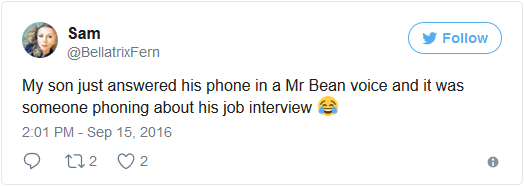
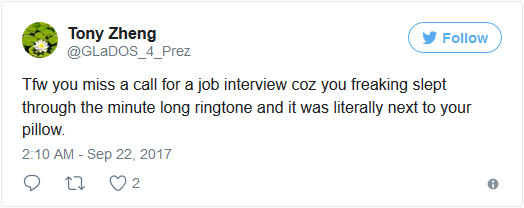
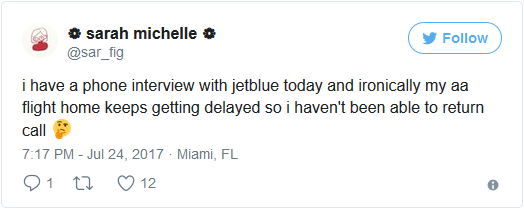
Better a return call when you're ready than a missed call when you aren't.
Photo by Matthew Kane
This is a guest post by Graeme Gilovitz.
This has to sound like the stupidest idea you have ever heard.
How can you get the job if you don't actually talk to someone?
Even today, when you can communicate via so many media such as email, SMSes, WhatsApp, LinkedIn, Facebook Messenger and any other applications, the only way to actually get the job is to talk to someone on the phone at some point and then meet them.
Yet…
Note: There is a poll embedded within this post, please visit the site to participate in this post's poll.
Two reasons to ignore recruiter calls
1) Get prepared
As a recruiter, we love to catch people off guard because then we get to see (or in this case, hear) the real you and how you behave. Your tone gives us a great insight to your attitude, personality, politeness and professionalism.
So when we call and you have no idea who we are, where we are calling from or what role you applied for, you are already on the defensive and the power is with the recruiter. Most likely, you have applied for a few jobs and after a while the calls all sound the same which makes it harder to answer any of their phone questions.
It would be funny if it weren't so true.
This little conversation is the first stage of the interview process and needs to be treated with as much preparation as a face-to-face interview, even if the call only lasts 5 minutes.
Not answering the call gives you time to gather all the relevant information regarding your application, find a quiet place to talk and focus on answering their questions as well as you can. You can’t do any of that when you are taking calls on the fly, especially in a noisy area.
So instead of rushing to take the call, call them back.
2) Play hard to get (a little)
When someone is a too easy to get hold of, it gives the impression that you are sitting by the phone all the time, which translates into “I am desperate for a job”. But if you play a bit hard to get, you can increase your “perceived value”.
You can always tell them later that you were in an interview, or a meeting, etc., giving the impression that you must be a valuable potential candidate because other people are already meeting with you (simple logic of supply and demand).
Alternatively, just say that you were “unavailable to take the call” – the most universally used excuse ever.
What to do after ignoring the call
When you actually return the call, follow these tips:
Find a quiet place to talk and more importantly, where you can listen
Have a copy of the recruiter's job ad ready – make sure that you have reread it and have notes
Have a copy of your application (resume and cover letter) to reference, and especially selection criteria (if there were any)
As you know the name of the person who called (if they left you a message) and where they work, do some background digging – try LinkedIn and Facebook. I wouldn't recommend you using this information but at least you'll know who you are dealing with
Apologize for not being able to take the call
Have note paper and pen in case they mention anything useful or ask you for an interview and they provide details
What happens if they don't leave a message or you accidentally answer the call?
You need to get off the call ASAP no matter what!
Apologize and explain that it isn't a convenient time to chat “as you are expecting an important call” and ask that you call them back at an agreed time
Graeme Gilovitz is Director of Summit Resumes and Summit Talent (an Australian-based recruitment agency with an international reach and client base), & has worked in-house with the some of the largest companies in Australia. With a background in advertising and marketing prior to recruitment, Graeme possesses an unique perspective on communication, the recruitment process and how to ensure that you get the most out of your job search. He blogs regularly, focusing on his insights.
Subscribe to JobMob via RSS or email and follow me on Twitter to get the most out of mobile video on your job search.
“Any leads on how to find a job that can be done on my laptop, here and there, so that I can still pay my bills while traveling?”
This reminded me of the time when I was still a programmer at Amazon.com back in 2000.
Living in Paris but working daily over the Internet with people in Seattle, I wanted to visit my family in Montreal without taking a lot of vacation time either. Luckily, Amazon's computer systems allowed people to connect from outside the office and that made it easier to convince my boss to let me go.
In the end, I only took off 2 days for traveling purposes and otherwise worked full days from my parents' house, basically paying for my trip and expenses. A side benefit to Amazon was that having me in a middle time zone (6 hours behind Paris but 3 ahead of Seattle) made some projects easier to finish on time.
Freelancers and small business owners
Join 4 million freelancers who use Payoneer’s payment solutions:
Working while traveling abroad and telecommuting aren't quite the same thing
People usually associate telecommuting with a full-time job that lets you regularly work from home, but it can also be a part-time job on the road.
To best answer the question above, let's set out some criteria that make more sense regarding jobs for travelers. Those jobs usually need to be:
Jobs you can do over the Internet
Jobs that can be done over a short time-span i.e. during your travels
Jobs you can get on short notice
This last one is important in case you need multiple jobs to pay all your bills during your trip.
So we're dealing with freelance jobs. However, if you choose well and deliver well, a short-term freelance job can become a longer-term freelance job that you continue from home after traveling.
Jobs you can do while traveling
With that in mind, the list below of online jobs for travelers should give you all sorts of ideas. Each job title points at a real job description, and if the description isn't a good match for you, just do a search on the job title to find more open jobs like it.
Like with any job, having work experience will help a lot compared to a candidate who has no experience. But even having just a little bit of experience will make a difference because it will still allow you to tell potential employers “I've done this online before”.
With that in mind, get experience before your travels by doing some quick, cheap projects. This has the added benefit of getting you familiar with freelance marketplaces, negotiation with potential employers, and actually getting paid with all that's involved.
It would suck to be in a foreign country expecting to receive your pay the next day only to discover that you need to wait a few more days because of some strange policy you didn't know about. Practice before you go!
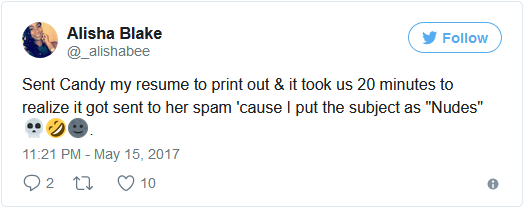
Recruiters can only respond to your email if they actually get it.
Photo by Karl Fredrickson
One of the most frustrating things about the job search process is the uncertainty. What's it going to take to find that next job? How long will it take? And so on.
There's a particular kind of uncertainty that drives job seekers crazy: not getting a response from recruiters.
When I ask my readers what their biggest job search challenge is, this problem comes up again and again-
“not hearing back”
“I have sent some CVs out but haven't gotten responses.”
“The biggest problem I have is getting responses to my job applications.”
If you're like most job seekers, you are probably more likely to be bothered about the lack of recruiter response than you are about getting rejected. Crazy but true.
Here's the thing though-
That lack of response is often because of something you did: sending an email job application that was automatically flagged as spam.
You get aggravated by not hearing back, but the recruiter never even saw your email, and good luck getting them to check their spam folder when you have no better way of contacting them directly.
Stop shooting yourself in the foot.
Here's what you can to do to increase your chances of getting to recruiter inboxes. And you'll see how I also have to do better.
Note: There is a poll embedded within this post, please visit the site to participate in this post's poll.
3 ways to avoid recruiter email spam filters
A) Blacklist check
If your job search email address is from Gmail, Yahoo or Outlook, you can skip this tip and go on to the next one, but pay attention if your email address is from your own personal website or any kind of organization (your current employer?) that regularly sends marketing emails such as client newsletters.
Email spam being the massive problem that it is, companies and others have compiled blacklists of mail servers that are being used for spamming. Spam filters then check incoming email against those blacklists.
If you're sending email from a blacklisted server, your email will be flagged as spam and the recruiter will never see it.
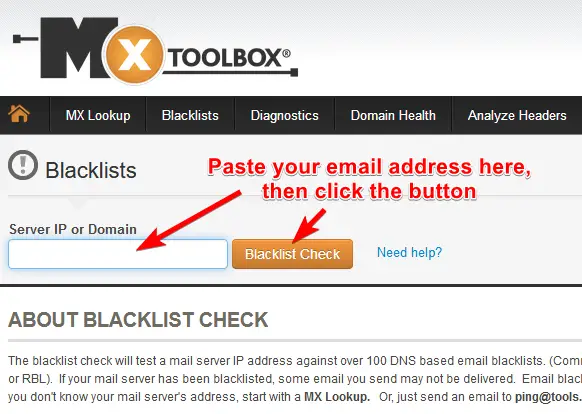
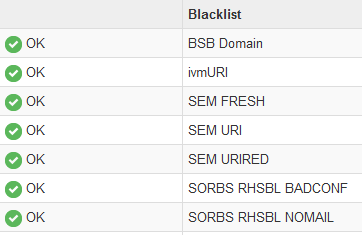
Use a free tool such as MX Toolbox's Email Blacklist Check to quickly check over 100 different blacklists for the mail server used to send your email:
Running the check will generate a list of results. If all goes well, you should a lot of green OKs like this:
However, if you see any red LISTED results, consider getting a different job search email address before applying for any more jobs over email.
You can also compare your results with another tool such as IsnotSPAM.
B) Score how spammy your job application emails are
A email blacklist check is just one kind of anti-spam tool you can use. Another kind will take your email and score it according to how likely it is to be considered spammy by spam filters, such as Mail-tester.com.
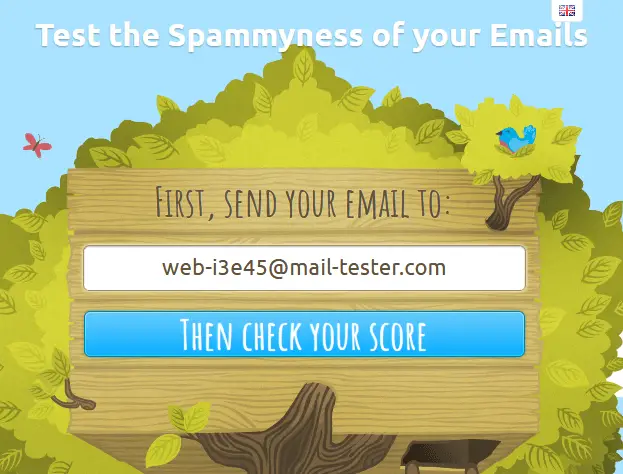
Before emailing a recruiter, send your job application email – the actual email you were planning to send – to a unique mail-tester.com email address shown on their homepage:
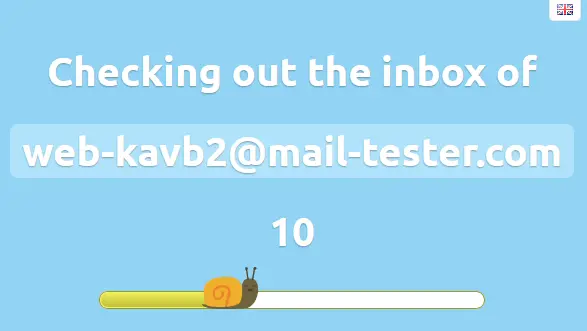
Next, click “Then Check Your Score” and Mail-tester gets to work scoring your email:
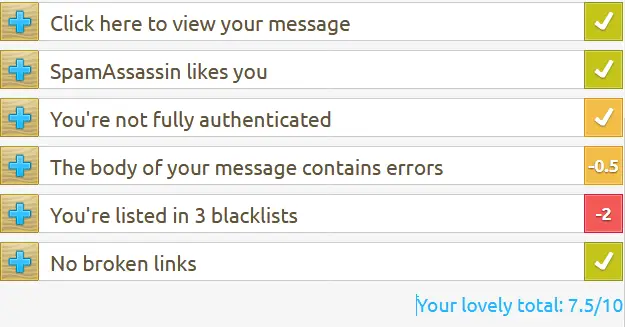
When it's done, your final results will show where your score lost points:
Clicking any line in the report will provide details. You can actually see my results here.
For this test, I simply forwarded a recent newsletter I'm subscribed to, which means that their message “contains errors”.
More importantly:
Argh! My email server is on 3 blacklists!
It's only 3 lists out of 21 checked, so I should be ok, but it's still worth trying to do better. I want to be sure my email will always get to where I want it to.
C) Avoid doing things like a spammer
Spam filters use many rules to score your email in deciding if it's spam or not, just like Mail-tester above.
SpamAssassin, one of the most popular spam filtering programs out there, provides tips on their official website on how legitimate email senders like you can get your non-spam email past their filters.
Based on those tips, here are some of the most common things you should avoid in your emails to potential employers:
1) Email priority
If you're using Outlook or another email program that lets you set priorities, don't set your message to high priority/importance. Classic spammer tactic to make their junk stand out in an inbox.
2) BCC
Don't send your job application to multiple employers by using the BCC (blind carbon copy) option.
If blindly emailing different people the same generic message isn't spam, what is?
3) Subject lines
Don't leave your email subject lines blank. That screams ‘spam!'
A subject with an exclamation point can also look spammy, especially when together with a question mark.
If you need ideas for your great subject lines, there are so many good ways to fill them.
4) Email content
Don't address the recipient with a “Dear Madam,” “Hi friend,” “Hey girl,” or anything remotely generic. Where job seekers are more likely to trip up is with a “To whom it may concern” or similar, which is just as bad. Do your company research to get a contact name.
Your conversations with recruiters often start with an email cover letter, and that shouldn't include any special formatting or attention-getting design using colors and images.
You definitely don't want to use any spammy language such as “urgent reply needed”, even if you clearly do want a response asap. Even mentioning sums of money, such as how much you earned for a past boss, can look spammy.
5) Attachments
Some experts recommend not attaching your resume but it really is common practice. However, stick to safe file formats such as PDF, RTF or DOCX as opposed to any kind of compressed file (ZIP, TAR, RAR).
There's no reason your resume should be larger than 1 MB (and even that's quite large for a 1-2 page document) and large attachments will look suspicious.
Many of them were in the marketing industry and mentioned how they used professional marketing tools as part of their “job search campaigns”.
If you're also thinking of being creative and e.g. using marketing email tools to spam mass email recruiters, your emails will have a much higher chance of being flagged as spam unless you know what you're doing. Be careful.
Finally, you can test all these tips but by checking what's in your own spam folder.
Start your first impressions with a good first impression.
Photo by Jonas Vincent
Have you ever noticed this?
People shake hands all the time. Unless your handshake is particularly bad, people will rarely react negatively to it and they'll ignore the occasional jitter or semi-clasp. On the other hand (pun intended), if your handshake is particularly good, you will stand out and people will remember you.
But here's the kicker:
When it comes to job interviews, the opposite is actually true.
a firm, solid handshake is an important part of a successful job interview, while a dead fish can end the interview before it even begins
Put differently, while a basic handshake is expected and won't stand out, a bad handshake can ruin everything.
Ultimately, since a handshake is such a common thing, expectations are relatively low. That also means you can easily achieve good results.
Note: There is a poll embedded within this post, please visit the site to participate in this post's poll.
Free bonus: The One Job Interview Resource You’ll Ever Need is a handy reference to help you prepare for any kind of job interview. Download it free now
The Best Handshake Ever?
My secret handshake is just me high-fiving my dog.
A friend of mine has the best handshake in the world.
No, really.
The first time I met him and we shook hands, I was literally wowed.
Here's what made his handshake so great (over-detailed analysis coming up…):
1. Softness
Nobody likes shaking hands with sandpaper. Although you don't necessarily need to carry around a bottle of hand moisturizer, at least make sure that your hands aren't rough to the touch. Introduce coconut oil into your diet somehow.
2. Moisture
Without being sandpaper, your hands should be dry and not sweaty or clammy. Let them air out.
3. Temperature
Your hands should be warm, not cold.
4. Texture
Do you like shaking hands with someone's scabs or callouses? Enough said.
5. No bandages or casts
You don't want people to think they might hurt you by shaking your hand.
6. Clean
The only thing worse than worrying about hurting someone's hand is worrying about catching a virus from it like warts, a cold, etc. Even feeling just one Band-Aid is discomforting.
7. Few rings to none
The fewer rings there are, the less chance of pinching and hurting someone's hand.
8. Confident reach
Don't wait for someone's hand to come to yours, reach for theirs and meet it.
9. Good timing
Lock hands without any jitters or fumbling, sliding one hand into the other. Don't aim to grasp fingers, aim for the palm.
10. Perfect position
Aim for the webbing of your hand (skin between thumb and forefinger) to catch the webbing of their hand. Thanks to David Tra for pointing that out.
11. Solid grasp
Everyone hates the dreaded “dead fish” where someone leaves a limp hand in yours. Do the opposite; clutch the palm without squeezing so hard that it becomes painful for the other.
12. Positive
Grin or smile while shaking hands.
13. Be sincere
Don't just grin or smile, do it like you mean it. A fake smile ruins the whole effect.
14. Look them in the eye
The best way to prove you're being sincere.
15. Shake source
“Shake from the elbow, and not from the shoulder,” says international etiquette expert, Denise Zaldivar.
16. Shake method
“Aim for 2 pumps when shaking,” Denise also recommends.
17. Shake vigor
Don't shake too vigorously, but don't let them shake your whole arm either.
18. Know when to let go
A good shake usually involves a palm squeeze and release, but be careful if the other person is too quick or too slow, which could lead to an awkward moment. Instead, with a confident reach, be first to engage and disengage.
19. Synchs with your personal brand
For most people, this just means following all the previous points to being a handshaking professional, but for some people this means having a unique handshake or one that's more in tune with their profession. If a clown always shook hands in a serious way, you'd wonder about his sense of humor.
20. Memorable
So few people do this that if anyone ever impresses you with their handshake, you won't forget them just like with my friend above. If your handshake is memorable, it is successfully building your personal brand.
21. Viral
Not in a bad way… this whole article came about because my friend's handshake was so terrific I had to tell you about it.
Bonus tip
22. Encourages loyalty
A great handshake is one that makes people want to shake your hand again. For that, they'll need to have you around them again.
Choose the right coach by asking the right questions.
Photo by Jordan McQueen
Many job search and career coaches offer free consult calls as a way to connect with you.
But the free consult isn't really a chance to get a lot of free advice. Instead, it's a way to explain your situation and then flip the tables around to interview the coach and see if you should hire them to help you get hired.
To make the best choice, you need to know the best questions to ask during a free consultation.
Note: There is a poll embedded within this post, please visit the site to participate in this post's poll.
Free bonus:Download JobMob's Free Coaching Consults Guide which contains a directory of coaches offering free consults, and a list of the top questions to ask them during those consults.
17 questions job seekers should ask in a free consult
Name: Thea Kelley
Based in: San Francisco Bay Area, CA, USA
“Based on what I’ve told you about my situation, how can you help me get more interviews and then succeed in those interviews?”
“Why do I need interview coaching now? I’ve just started my job search.” (Answer: A phone screening or informal “conversation about an opening we might have soon” could happen any minute.)
“What’s your approach to interview coaching?” (My answer is: It’s proactive: not just “how to answer common interview questions” – and we will cover that – but knowing what you want to emphasize, why, and how.)
Name: Ford Myers
Based in: Haverford, PA, USA
“Here are a few great questions clients have asked during the initial consultation:
– How do I figure-out what kind of work I’d really like to do and how I’d ideally like my career to be?
– How can I identify what’s holding me back and getting in the way of reaching my career potential?
– How do I close the gap between where I am now and where I want to go in my career?”
Name: Shayna Lee
Based in: New York, NY, USA
The best question any job seeker or person can ask a coach is, “How are we measuring the progress I make by working with you”.
While the client is the one doing the work and generating the results they desire, it is the coach's job (in my view) to hold that client accountable to the process and help them to stay on task. So tracking and monitoring tasks/milestones will be a key factor for defining success!
Name: Sharon McCormick
Based in: North Carolina, USA
The best questions are when my clients tell me that they care about people and our planet, and they want to know HOW to make a career change to do more for humankind. They want to know HOW to develop as greater leaders. I LOVE that. I looked through my client communications and those questions are a common theme and the best in my opinion. I love people who think like that – like how to help others!
Name: Tina Monk
Based in: Neutral Bay, NSW, Australia
I think that the best question to ask is: How do I get the most out of our time together?
Name: Hamza Zaouali
Based in: Dubai, United Arab Emirates
Towards the end of the consultation, the #1 question I would ask a coach if I was a job seeker is:
“I need to tell you that I'm currently in touch with other coaches as well and I want to make sure I make the best choice. In your opinion, why do you think I should choose you?”
If the answer is not convincing, move on. If you feel your question irritates him/her, I wouldn't pursue either.
Name: Naren Chellappah
Based in: Melbourne, Australia
The typical questions we get asked are “why can’t I get interviews and why won’t the recruiters/companies offer me the job?”
The other common questions are – “Is there something wrong with my profile stopping me from getting a job?”
After we have assessed the person’s profile, we can advise them on the issues holding them back – such as poor quality job application, no local experience, poor interview skills or competition from stronger candidates (which we need to help them match).
Name: Michelle Flint
Based in: USA
The best question (which I frequently get) is, “Can I really do this?”
Many times, my clients come to me discouraged because they are really stuck. Perhaps they have no idea what they want to do with their lives, or perhaps they have been job hunting for a long time with no results, or perhaps they have a terrible, critical boss who has left them completely without confidence. As a result, they are afraid they will never find a good job that makes them happy.
I appreciate when clients bring this question to the table right away because then I can talk to them about what we're going to do differently together that will get them where they want to go. Usually clients leave that initial consultation with a lot more hope about their worth and their future– that's why it's such a great question to ask.
Name: Bethany Wallace
Based in: North Central Arkansas, USA
The best question job seekers ask me during an initial free consultation is:
“What is the next step I should take as a job seeker?”
In my opinion, this is the best question because it demonstrates a willingness to learn and grow, and it's not just asking for facts (like how much I charge as a career coach). It's gathering real advice.
Name: Mark Anderson
Based in: Brighton and Sussex, UK
1. Can I contact any of your previous clients to discuss their experience?
2. What makes you different from any other Career Coach?
Question of the article
What do you think is the best question to ask in a free consult? If you've asked it, did you like the coach's response? Tell us in the comments.
We usually find it pretty easy to call other people names, but could you do it for yourself in a job interview?
It's a good intellectual exercise that's harder than you'd think.
Note: There is a poll embedded within this post, please visit the site to participate in this post's poll.
Free bonus: The One Job Interview Resource You’ll Ever Need is a handy reference to help you prepare for any kind of job interview. Download it free now
One real-world example
From one of the comments on Scott's article:
“I was asked this very question in an interview.
I stammered, so he (the interviewer) revised it, “One *good* word”. I was still dumbfounded, so he revised it yet again, “One *good* word, one *bad* word.”
Smart. Ass.
Easy
I got the job.”
How you should describe yourself
If you've done your company research at any point before the interview, you should have an idea of what kinds of values they appreciate. Simply choose one that accurately describes you and run with it.
If you haven't noticed any particular company values standing out, choose a favorite word from these 130 powerful personality adjectives, all of which are positive.
Recruiter Jeff Altman answers in more detail:
Your turn
Imagine if you were asked to do this test in conciseness in your next job interview. Without answering ‘unique' (too easy), how would you respond?
He also asked that people describe him in one word too and some people linked the two together. ‘Me' is the commenter, and ‘you' is Scott Adams. Here are the ones I liked most:
A handy directory of top career coaches who let you try before you buy.
Photo by Austin Neill
Why do top athletes have coaches?
Simple: to get better results, faster.
Similarly, in 6 Reasons You Might Need a Job Search Coach Now, job seeker coach Rita Ashley said that having a coach helps in “securing a better job, reaching it faster and gaining the intangible benefit of control over” your job search.
Who doesn't want that?
But then, how do you find a good career coach who can get you that?
You could try googling ‘career coaches near me', but where you live will largely decide how useful that is. Plus the fact that a career search coach is local in no way guarantees they're any good.
You could try asking your network of contacts for recommendations, and if you're lucky, someone you trust will actually be able to speak from experience. But what if they're in a different industry, or at a different stage in their career?
It's not so easy to find the best career coach for you, which is why I've compiled this list of career coaches from around the world who offer a free consult upfront.
Most of the coaches here offer initial phone or Skype consult calls you can use to explain your situation and discuss their coaching services and pricing, while some give free resume and CV reviews.
Use the free call to see if there's good chemistry with the coach to be, and try to understand if you'd enjoy working with them.
Note: There is a poll embedded within this post, please visit the site to participate in this post's poll.
Target audience: High level professionals, CURRENTLY EMPLOYED but seeking to make a career transition or an up level into a role that fulfills their passion and nurtures their talent either at their current company or a different company.
Name: Sharon McCormick
Based in: North Carolina. Sharon has a virtual practice and serves other cities around the USA.
Target audience: Consists of mid-career changing professionals who want to advance in their jobs or make a career change. I work with my clients virtually, so I work with clients across the country. I assist clients from most industries including Government, Non-profit, Corporate and Higher Education.
Target audience: job seekers – people who have been made redundant or are looking for a new/better job, they know what they want but don’t know how to get it; career changers – people who are not happy in their current career and want to make a change but don’t know what to; and people who want to achieve life goals, such as relationships; and leaders who want to improve their leadership skills. They are Sydney-based with a median level income or above.
Name: Simon Scantlebury
Based in: Berkshire, Hampshire, Surrey and Wiltshire and other locations across the UK
Target audience: “individuals who think they could benefit from professional career coaching/counseling, and who are ready to invest financially in professional career services.”
Target audience:
✓ Female, mid to late thirties, infant children, London, south-east or home counties, university education, professional – has worked long hours to achieve high status role in a profession but this is no longer compatible with having a young family.
✓ Male, creative, arty type in a job that is not creative or arty. Early forties. Live in Home Counties. Young family. Wants to do something with the next chapter of his life that keeps income level high but doesn't destroy his soul.
✓ Single female professional, ambitious, focused, expert in her field. Wants to move into a different industry or a different company but has been in one company all of her career. Early forties. Change feels scary. Doesn't think she can have what she wants without going back to uni. Well-read, like nights out with the ladies, good independent cinema, pop up restaurants, travel.
Target audience: anyone who wants to discover what their most fulfilling career and job would be and a way to achieve it. This is a creative, individualized 4 step process. It works best with people willing to determine what they’d like first, and then figure out what they need to do to get there. It’s not a good match for people who want to start with their skill set and see who’s asking for that set. It’s also not for people who prefer to use standardized assessments. Can meet in-person if in Twin Cities, Minnesota area.
Target audience: “Ideal for those who are changing careers, reentering the workforce, looking for a promotion, wanting greater satisfaction out of their career, or needing a better work/life balance. Ideal for Executives that need strategies to build and manage teams, navigate corporate politics or get to the next level.”
Target audience: “executives, professionals and executive assistants to pharmaceutical sales reps, newly discharged military personnel, fashion photographers and union plumbers. With clients across the U.S., Europe, Central and South America, she enjoys coaching professionals and creatives at all levels and in every industry.”
Target audience: “Professionals (not new graduates) ready to make changes in their career at this time and serious about investing their time and money in receiving independent, professional support to achieve that aim.”
Target audience: “helping people to feel a sense of fulfilment in all aspects of their lives and she has had great success coaching clients to achieve their personal, career and life goals.”
Target audience: “helping professionals since 2009 and has now helped hundreds of happy clients to find their next role, make big career changes, start businesses, develop confidence, get promoted and noticed, and much much more.
Target audience: “20somethings and 30somethings around the world to discover their authentic careers, land more job offers and launch their dream businesses”
Target audience: “Anyone, worldwide. There are no geographical boundaries. We would be pleased to talk with you about career coaching and explore together how it might benefit you.”
Target audience: Mid-management to top executive level. I coach professionals around the world so no geographical restriction. I specialise in Job Search Coaching, CV Writing, Interview Preparation and Salary Negotiation (or Re-negotiation)
Target audience: “We help international students secure top graduate jobs by providing graduate careers advice and professional coaching on a one to one basis. ”
Target audience: “I help DC overachievers find and communicate their inner awesome, whether they are looking for that next step in their career or aiming for greater things where they already work. I have worked with clients from a variety of backgrounds, including business, advocacy, public policy, public relations, and international development.”
Target audience: We are international company with websites in 12 countries servicing anyone that requires our services in English, German or French and we work with anyone of any age, looking to further their career.
Target audience: “Our coaches offer free coaching on various topics: Career, motivation, limiting beliefs, relationships, confidence, family, parenting, work-life balance, well-being, healthy living, fitness, change, habits, and many more. Therefore, we don't have a specific target audience. Anyone who wants to improve their lives can work with our coaches.”
Question of the article
If you've used a job hunting or career coach in the past, what was most helpful?