You've been laid off, fired or quit. Before you say goodbye, how should you handle your last day at work?
Photo by Matt Reinbold
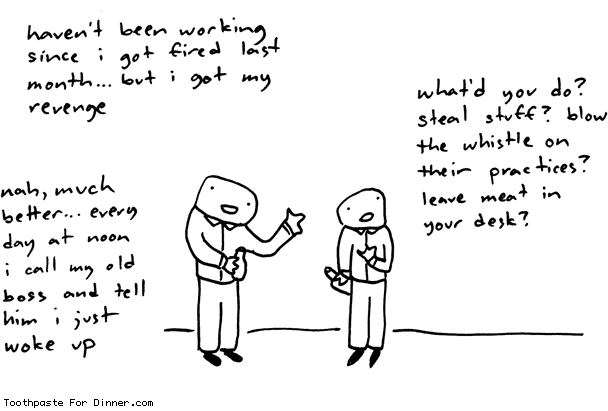
Pranks and funny things to do on your last day of work
21. Have a nice onion-filled breakfast before heading in to work for the last time
20. Film your final day with a GoPro'ed helmet so you can later post “highlights” to YouTube
19. Post-It notes are your friend. Hide random notes around the office in places where they'll only be found weeks or even months later. Write things like ‘I know what you just did' or ‘It wasn't like this when [your name] was here'
18. Make smiley faces & leave cutesy messages (“miss you”) on random blank pages in the photocopier or printer.
17. Permanent markers. Whiteboards. Need I say more?
16. File expense reports with bills you found on the floor at a supermarket or sports store.
15. Carve your initials into your computer screen.
14. Change your computer's wallpaper to a big closeup of your eyes.
13. Privately tell 3-4 random ex-coworkers-to-be how you heard they're next on the chopping block.
12. If your company has any internal mailing lists, take 10 minutes to subscribe them to external mailing lists that everyone will “enjoy”
11. Then, subscribe the company-wide mailing list to itself.
10. Use the company resource reservation system to completely book all meeting rooms for the next 2 years
9. Now's as good a time as any for those company-related questions you originally left out on your annual performance evaluation forms, don't you think?
8. Cry a lot throughout the day. Not the way you would normally cry though. Screechier.
7. Speaking of former employees… do that a lot.
6. Give an emotional farewell speech where you randomly pick someone and slowly, very deliberately, say “But [their name]… I'll miss you the most” with a slight smirk, all the while eying them in the creepiest way you can.
5. Look at that farewell speech as your last chance to give others some constructive criticism to remember you by.
4. Be over-the-top sincere in telling each ex-colleague-to-be how you're still going to keep in touch with them. Extra points for doing this with superiors.
3. Brag about the new, better, higher paying, less stressful job you've already got lined up… at a major competitor.
2. Tell your boss how you really feel about them. Don't hold back, honesty is the best policy. Next, tell your boss's boss how *your boss* feels about them, in a post-layoff followup email, if they're currently unavailable.
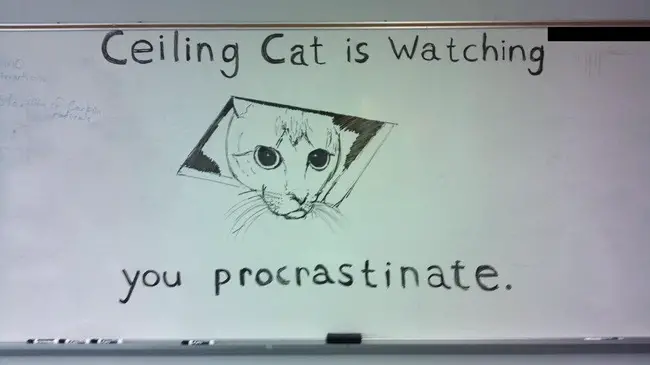
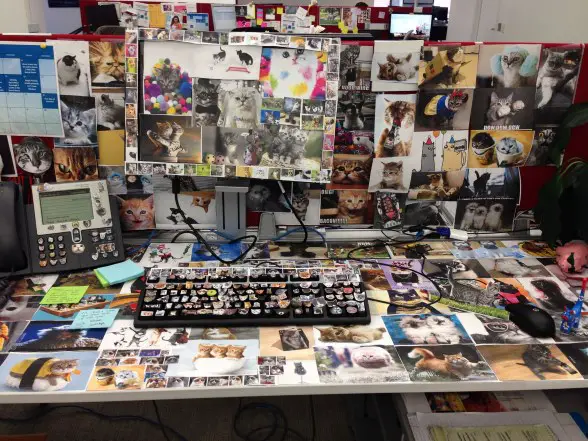
1. Cat-tack someone, anyone
Bonus
0. Purposely forget to tell everyone about the pizzas you've ordered to the office tomorrow.
0b. Change a critical company password without telling anyone and then demand cash for it (which someone actually did)
What you actually should do on your last day at work
What do you think are funny things to do on your last day of work? Have you done any of them, or seen anyone else do them? Tell your story in the comments.
Hopefully you'll never need to job search in danger (unless that's part of the job) but these lessons will help you in any job search situation.
Photo by Lee Junda
Have you ever had to look for a job in emergency conditions?
Extreme situations happen all the time and can affect anyone's job search no matter where you live, such as crazy weather, building fires or others.
For more than two decades, citizens in various parts of Israel have lived under the threat of terrorist rocket fire, and needed to rearrange their lives when it become more than a threat.
As a local resident for most of that time, I've had my share of tough moments on and off the job search. Fortunately, there were some good lessons to take away for any job search…
Note: There is a poll embedded within this post, please visit the site to participate in this post's poll.
Summer 2006
Part I
In April 2006, my old company downsized my entire team of web developers and I. “Yippee,” I thought, “now we can go back to Israel.” My pregnant wife, 2 kids and I had been living in Paris (France) and after almost 4 years, it was time to leave.
Finally, towards the end of June, I started applying for jobs in Israel and quickly scheduled a week of interviews in mid-July.
On July 12th at around 6am, I landed in Israel after a night flight with a stopover in Prague. Not having slept much but having the whole morning to relax before a 2:30pm interview in Tel Aviv, I took a taxi straight from the airport to the beach and fell asleep… waking up in time to shower, change and grab a quick lunch before a taxi to Ramat Hachayal, the Tel Aviv neighborhood where many tech companies are based.
This was how my conversation started with the cab driver:
Me: “Nice day, isn't it?”
Driver: “What are you, crazy? Don't you know that a war is starting? Haven't you heard the news?”
Me: “Um, no. I was lounging on the beach all morning…”
While I was staring at the clouds, Hezbollah had fired rockets into northern Israel and attacked an IDF patrol near the Lebanon border, killing 3 soldiers and capturing 2 others. The army raced to respond and the Second Lebanon War began.
Over the next 9 days, I had 6 job interviews, all in the Tel Aviv – Herzliya area, far from where the rockets were falling in the North. Aside from small talk about the latest news from the front, I would never have otherwise known that a war was going on.
Part II
August 7th. Via a stopover in Budapest, I returned for a second visit to Israel and 7 more interviews, some of which were further north than last time but still not that close to the war zone where rockets were falling daily.
However, on August 13th, I got my first taste of rocket fire when I visited family friends in Haifa during Hezbollah's final barrage before the ceasefire went into effect the next morning.
I saw the full range of reactions to the air raid sirens and bombardment- people who kept driving as if the sirens weren't blaring, people who calmly but quickly took cover according to IDF guidelines, people who panicked and burst into tears regardless of whether they were exposed outdoors or safe in a bomb shelter. And all throughout, people calling or sending text messages to relay where a rocket (almost) landed and that they were ok.
Some businesses were open and some were closed, so if I had had any job interviews in the area, I would have had to call ahead to confirm on the day of the meeting. If the hiring company was open, would asking to reschedule to a quieter time have been ok? Probably, since no one thought the war would go on for months on end, but showing solidarity is a great way to stand out.
Fall 2012
The rockets from the North a thing of the past – hopefully for good – now it's the South that was getting hit.
Operation Pillar of Defense started on November 14th with the goal of finally putting an end to the rocket fire from Gaza that had sadly become the norm for years (4 years here in Ashdod, almost 12 years for people in Sderot, near the border).
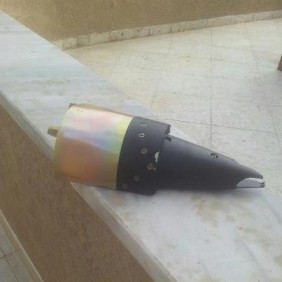
One big change is that since the previous year, the Iron Dome defense system had been in place to destroy incoming rockets. Back then, it had a success rate well over %80, but even when it did the job, burning rocket pieces can still hurt people and cause damage where they fall, like when a chunk of warhead (pictured) landed in my friend's garden, shaking the whole house.
Here's what the system looks like simultaneously taking out 14 rockets at night, when it's a lot easier to see in action:
Although Pillar of Defense had only gone on for less than a week, the initial impression most locals had was that it would go on for much longer. As a result, many people left the area to stay with family, friends or one of the many families across the country that opened their houses to us.
More than a few businesses closed from one day to the next, and some public transportation was reduced with everyone pretty much staying indoors as much as possible.
As in Haifa in 2006, you couldn't job interview if a company was closed, but you could reschedule. If you couldn't, or they preferred not to, fast mobile Internet access meant you could suggest a video interview with your smartphone.
Otherwise, you could also spend a little more time than usual job searching and networking online, especially if your computer could connect to the Internet from your bomb shelter or safe room.
Summer 2014
I originally posted this article in November 2012 during Operation Pillar of Defense.
Almost 2 years later, Hamas decided it would be a good idea to pick up where they left off, sending over 1000 rockets towards Israeli cities (with at least 100 falling in Gaza on their own people too).
Over 40 of those rockets were aimed at my hometown of Ashdod, but thanks to the amazing Iron Dome anti-missile system, only a handful actually landed in town.
This security blanket allowed many Israelis to continue going to work and living a normal life but with irregular work breaks due to air raid sirens, short walks to safe rooms and then, listening for loud booms as missiles collide in the sky above.
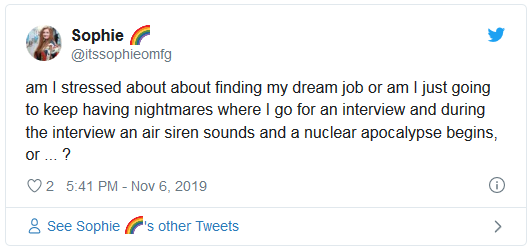
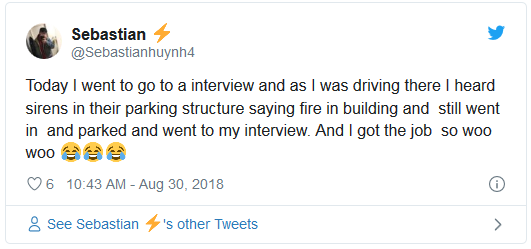
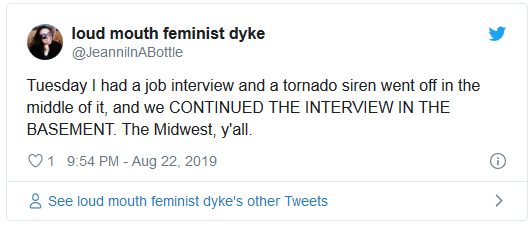
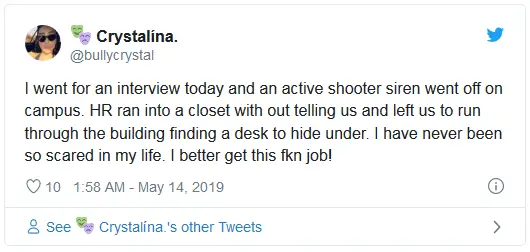
If you're in the middle of a job interview when such a warning rings out, how you react in that mini-crisis can actually help you make a good impression while also learning about the employer, your interviewer and its other employees. It's almost a surprise example of group dynamics testing or behavioral testing.
6 best practices for job search in an emergency area or danger zone
Here's what you should keep in mind if you're looking for a job in an emergency:
Keep a cool head at all times, showing that you can be counted on in pressure situations
Safety first, and that's your top priority until the danger level has gone down a lot
Make sure you have Internet access in your bomb shelter, safe room or anywhere else you may need to stay temporarily
Call one day ahead, or even the day of, to confirm your job interview is still scheduled. You may be in a safe place, but perhaps your interviewer isn't and they need to reschedule
Question of the article
Have any of your job searches been affected by extreme situations, such as war, riots or stormy weather? How was it different than usual? Tell us in the comments.
Subscribe to JobMob via RSS or email and follow me on Twitter for more exceptional job search tips for exceptional job search situations.
Can volunteering lead to a paid job? Volunteer work can help you in your job search, if you take the time to search for the right volunteer work.
Photo by Anna Earl
Why volunteer when you're supposed to be looking for a job?
Because it's the right thing to do?
Because it will make you a better person?
All true, but you need a job. You need to pay the bills, and how is an unpaid volunteer role going to help with that?
Well then how about this-
A 2013 study found that “volunteering is associated with a 27% higher odds of employment.”
That study was conducted by the USA-based Corporation for National & Community Service, who clearly want to encourage volunteering. How credible is the result?
A similar organization out of the UK, the National Council for Voluntary Organisations (NCVO), published a 2018 research briefing that painted a slightly more complex picture, saying:
Evidence shows unemployed people who volunteer frequently (on a weekly basis) reduce their chances of re-employment…
The few studies looking at the impact of UK government volunteering initiatives on finding a job show that only a minority of people who complete the programme find a paid job and say that it was volunteering that helped them do so…
However, volunteering can improve people’s skills, which may in turn help them find employment. Research suggests that volunteering improves both ‘hard’ skills, such as IT or customer relations, and ‘soft’ skills, such as teamwork and communication
So volunteering can help your job search, if you choose wisely…
I started volunteering at my local synagogue at a very young age when I could not have cared less about job search.
That's ok!
Donated time volunteering is never a waste, neither for you nor for the recipients.
Being active as a volunteer is a great way to meet people and discover things about yourself that can then lead to job openings and even new career directions.
Have these specific goals in mind when deciding on volunteer jobs that can best lead to employment.
Note: There is a poll embedded within this post, please visit the site to participate in this post's poll.
5 tough choices if you're wondering whether volunteering leads to employment
1) Aim for the right organization
anyone have tips on cold emailing/messaging (LinkedIn) someone regarding jobs or working for a company? I found a role at the hospital I volunteer at and I’m trying to find the right words to say.
Volunteer at the place that will most help your personal brand and job search goals.
If your goal is to be recognized as an expert, share your expertise on a regular basis at a local chapter of an industry association or chamber of commerce, or perhaps write op-eds or blog posts for that association.
If your goal is to be recognized for a specific job, offer your services in that role to a large charity that e.g highlights its volunteers on its website.
2) Aim for the right role
nobody asked but ive signed up to volunteer at an animal shelter because itll push me but not too hard n hopefully ill start to feel okay enough to get a job again and i know no one cares but im proud of myself for even filling out an application okie anxiety can suck it
A volunteering position should appear on your resume just like any other position, and not all roles are equal with regards to your career.
Which role will enable you to make best use of your skills AND provide great benefits to the organization?
That combination is key to being a successful volunteer and getting recognition for it.
3) Aim for the right team
If you are contacting someone who is a volunteer on a committee, board, association, or what ever other activity, just do them (and yourself) a favour and remember that they likely also have a day job and are a human with feelings.
This is a tough one, I admit it. Just like when you get hired for a job, you'll rarely be offered a choice of who your boss would be.
Instead, practice your company research skills with this exercise: just like when you job search, before applying to volunteer for an organization, spend some time learning about the people whom you would likely work with and understand how they could help you in the future.
For instance, an (older?) well-connected supervisor would be preferable to someone who's also just getting started in the organization.
4) Aim for the right recipients
Juggling being a full time student, working & volunteering honestly gets so overwhelming sometimes, but my job and volunteer program are both so rewarding that I don’t even mind & it makes it all worth it. keeps me motivated.
As part of the organization, who are the people or other organizations that you will spend your volunteer time helping?
Look for a role where you will get to help recipients directly so that people can learn about you & your work both inside AND outside the organization.
5) Aim for the right time to join
If the job of writing the next #starwars trilogy is still open, I volunteer.
This is more relevant in some cases than others. Some organizations have more volunteer opportunities during busier times of year, are only active seasonally, etc.
Another angle is to consider: can a volunteer organization enable you to get into an otherwise inaccessible event, or even an otherwise inaccessible career, perhaps in an industry that's growing fast but where you lack experience?
Do what it takes to be in the right place at the right time.
Plus, you get these benefits even if the event isn't industry-related, or even if it's not technically called a “networking event” at all.
Here are websites that you can use to find local job fairs, networking groups, industry events or any other kind of event that can help your job search.
Note: There is a poll embedded within this post, please visit the site to participate in this post's poll.
20 Websites For Finding A Local Networking Event Near You
Go to the events page to see if you've been invited to an upcoming event. Use the Search box to look for events directly. Ask your friends, or even ask other people by posting a question on the Wall of a relevant Fan page.
Use Twitter Advanced Search. Take advantage of the (albeit not great) “Near this place” filtering by area. You can also try searching by hashtag, since many events now have a dedicated one. Even better, search on the word “event” with a hashtag for the place name e.g. #NewYork or #Jerusalem.
In the right-hand search box, type in the location where you're hoping to find events. In the left-hand search box, type what kind of event (e.g. job fair) you're looking for, or just leave blank to see what comes up.
The homepage will suggest local events if it can tell where you are (it thinks I'm in San Francisco but this is probably just by default). Your best bet, especially if you don't want to create an account, is to click on the Find Events tab and search there.
Once you sign up and tell Meetup where you are, the Find page will suggest Groups or Meetups (events) near you, or you can manually search for events that interest you anywhere else.
The organizer of a LinkedIn Event plays the role of the event’s host. As an organizer, you are responsible for setting the agenda for the event, deciding logistics, inviting attendees, and updating the event group. You can organize events based on your audience, or the event’s content.
But while it's easy to create an event, it's not easy to invite large numbers of people right now, and it's also not easy to find events unless you were invited.
Stay tuned, because they'll definitely add features soon.
SoFi is a new kind of finance company taking a radical approach to lending and wealth management, and their events are “happy hours, educational events and member dinners happening in your neighborhood.” (USA-only)
Type [your city] in the Location box and [event] in the next search box. You can use the Advanced Search to refine dates or search on venues, which is handy if you live e.g. near a convention center.
Simply select your city, choose the event you wish to attend and purchase your tickets online. Any questions, concerns or advice can be called upon anytime simply by e-mailing Info@NetworkNite.com
A Circle can be a monthly roundtable at your home, a brown-bag lunch series at work, or even a virtual meet-up with people from around the world. The important thing is that you get together regularly—and that everyone participates. Your Circle can also join up with other Circles and create a Chapter that hosts events and supports networking.
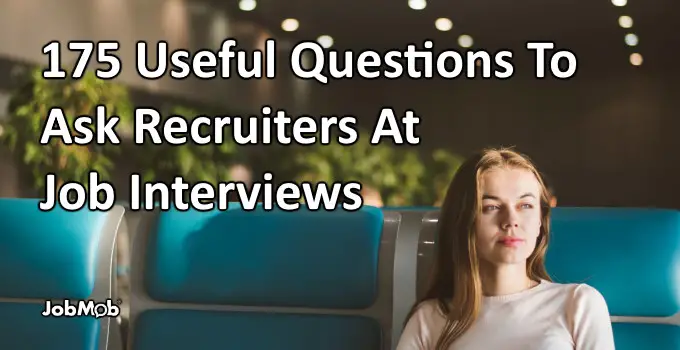
Pick and choose from this list of questions to bring to a job interview and learn if the job is right for you.
Photo by Artem Maltsev
If an HR manager or recruiter ever asks ‘do you have any questions for me?' after a job interview, you need to be ready.
Asking questions in a job interview is a sign of confidence and shows real interest in the employer and their open role.
Can you bring a list of questions to an interview?
Absolutely!
Preparing a list of questions will impress recruiters even more than if you ask off the top of your head, in showing that you're organized, professional and simply cared enough to do your homework in advance.
That said, skip any prepared questions that were answered earlier in the interview.
TIP: Although the list keeps saying ‘company, company, company', the questions are relevant if you're applying for a position at any kind of entity, and it makes no difference whether you ask them in an onsite interview or an interview done over the phone, email or via video chat.
If you know someone who has an upcoming job interview, please share this list with them right now using one of the share buttons above. Bookmark it too for your own needs.
Note: There is a poll embedded within this post, please visit the site to participate in this post's poll.
Free bonus: The One Job Interview Resource You’ll Ever Need is a handy reference to help you prepare for any kind of job interview. Download it free now
What Are Good Questions to Ask a Potential Employer?
Ask any question that will help you decide whether to join an organization.
The best questions to ask in a job interview will show off some of your soft skills, especially if you relate to points mentioned earlier in the interview.
Aim in particular to ask questions whose answers you couldn't find on your own, such as while doing pre-interview company research (although it's ok to ask related questions to publicly available information).
It's also a good idea to ask questions covering wide-ranging aspects of being a company employee, which is why I've divided the questions as follows:
Questions 1-71 are about the job itself
Questions 72-111 are about the company
Questions 112-131 are about the boss
Questions 132-162 are about the team
Questions 163-175 are about feedback and next steps
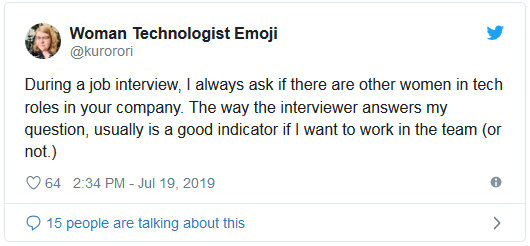
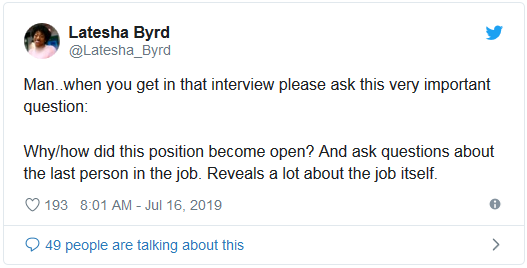
Why has this job opened up?
Is this a new position? If not, what did the previous employee go on to do?
How long has this position existed?
How would you describe the responsibilities of the position?
What tools are available to perform the role’s responsibilities?
What would you consider to be the most important aspects of this job?
Can you tell me about the competencies necessary to perform this job?
What types of skills do you NOT already have on board that you're looking to fill with a new hire?
What improvements or changes do you hope the new candidate will bring to this position?
What do you think are the most enjoyable or gratifying aspects for someone in this role?
What would you say are the top personality traits someone needs to do this job well?
What happened to the last person who held this job?
Would you want me to do anything different from the previous person(s) in the position?
What were the major strengths and weaknesses of the last person who held this job?
May I talk with the last person who held this position?
How many people have held this position in the last two years?
How many people will you be interviewing for this position?
How would you describe the ideal candidate?
Thinking back to the person who you've seen do this job best, what made their performance so outstanding?
How would you define “success” for this position?
What particular aspects about my background and experience interest you?
What makes you think I will be successful in this job? Does anything cause you concern about my candidacy?
How can I most quickly become a strong contributor within the organization?
Are there any useful kinds of experience that I could try to get that may help my progress?
Will the work be similar most days, or will there be some variety from day to day?
What kind of authority does this position have?
Would I manage any employees?
What sort of budget would I have for running the team?
While I know this is an entry level position, would I have the chance to participate in strategy or client-oriented meetings?
Will I have exposure to clients? If so, how much?
How much opportunity will I have for decision-making in my first assignment?
What decisions can be made immediately without having to ask permission or get approval (from a higher level, or a committee)?
How does upper management view the role and importance of this department and this position?
How important does upper management consider the function of this department/position?
If I'm offered the job, how soon would you like me to start?
If I'm offered the job, how should I best prepare before I start?
Does the position have a probationary/trial period? If so, how long is it?
If I were to start tomorrow, what would be the top priority on my to-do list?
What are the most immediate challenges of the position that need to be addressed in the first three months?
Can you give me a 6-12 month outlook on this position and where you see it going?
How does this position fit into the company’s long-term plans?
What kind of induction or training will I complete when I begin the job?
Will I be given an employee handbook?
What are typical work hours? Is overtime expected?
Do employees normally work overtime? What is expected on that front?
How would you describe a typical week/day in this position?
What’s the salary range?
Do you provide any non-financial assistance, e.g. time off for studies?
What benefits, bonuses or perks come with the job?
After the initial minimum salary, are increases standard for all associates or is there an “award” system? If there is such a system, on what basis is the “award” made and by whom?
Are salaries tied to the cost of living index?
Are salary adjustments geared to the cost of living or job performance?
How do you envision this position supporting you?
How will you judge my success? What will have happened six months from now that will demonstrate that I have met your expectations?
What are the performance expectations of this position over the first 12 months?
What are the avenues for promotion?
How does one advance in the company?
What are the prospects for growth and advancement?
What are the opportunities for progression and increased responsibility within the organization?
What are the career paths in this department?
Where have successful employees previously in this position progressed to within the company?
Are there any changes coming that will affect the department or role?
Is relocation a possibility?
What is your organization's policy on relocation/transfers to other cities?
How often can I expect to relocate during the initial years of employment with your organization?
How much travel is expected?
What is the most challenging thing to get used to in this position?
What are the hazards of the job?
Do you have health and safety meetings?
Is there safety equipment I'll be expected to wear? Will I receive training in how to use it? When?
What sort of equipment would I be supplied with? Would I get my own desk?
Tell me some of the reasons people like working here.
What do you see ahead for the company in the next five years?
Who do you consider your customers to be?
What is your company’s market or target demographic?
What makes your company better than your competitors?
In what ways is a career with your company better than one with your competitors?
What are the areas where your competitors are better than your company?
What is the biggest challenge facing the company today?
What new product lines/services have been announced recently?
How does the company attract sales or develop client relationships?
From your perspective, what are the strengths and weaknesses of this company?
What are the company's strengths and weaknesses compared to its competition?
What do you consider to be your firm's most important assets?
What are the long- and short-term goals of the company?
What are a few things that really drive results for the company?
Does the company have a dress code? Is this for everyone or only certain departments?
How do current employees feel about their jobs and the company?
Why do you think people leave this company?
How financially sound is this company?
What particular computer equipment and software do you use?
What is the company policy on Internet use?
What’s your stance on employee involvement in social media?
Could you describe your company's management style and the type of employee who fits well with it?
Can you tell me about company culture?
What would you say is the most important aspect of your company culture?
Are there any company-sponsored social events such as a company softball or golf league in place?
What do employees do in their spare time?
What are the opportunities for training and career advancement?
How much paid training do you provide to each employee per year? What kind of training is it? Can employees choose or recommend the training they take?
How do you ensure that the salary of long-term employees stays competitive, especially in a hot job market?
What is your policy concerning raises? How regularly do you give raises? Do you consider a yearly increase in salary equal to the local inflation rate to be a raise?
Do you provide share options, profit sharing, retirement savings contributions, or pension? If so, what are the details of the plan(s)?
What medical benefits do you provide? Do you cover dental work or eyeglasses? Do you cover health preventative measures such as exercise programs, vitamins, or preventative medical exams?
Does your company encourage further education?
How does your company's tuition reimbursement program work (if there is one)?
What is company policy regarding working from home?
Have you cut your staff in the last three years?
Is your company environmentally conscious? In what ways?
What kind of partnerships does your organization have with others in the community?
I’m anxious to get active in the local [industry name] community. Is this something that you encourage?
Do you like working here?
Can you please tell me how your career has developed at this organization? Would someone entering the firm today have similar opportunities?
What tangible and intangible qualities attracted you to the company?
What excites you about coming into work?
What do you appreciate the most about your company/organization?
If you could change one thing about this company, what would you change?
Who does this position report to? If I am offered the position, can I meet him/her?
Is my boss's performance evaluated on how well he/she develops his/her subordinates? On the success of the department?
Who are the key decision makers that I would need to get along with, and how would you describe each of them?
Who will be making the hiring decision?
How often will my immediate supervisor meet with me one on one?
How would you describe your management style?
How do you feel about creativity and individuality?
Can you explain how you let someone take a project and run with it?
Do most associates achieve their billable hour target? Do most associates exceed that target?
What are the various ways employees communicate with one another to carry out their work?
How and by whom will my performance be reviewed? Are there specific criteria upon which I would be evaluated?
And how frequently is formal and informal review given to new employees?
Does the company have an internal appeal process involving disciplinary action?
How do you deal with poorly performing employees?
How many people work in this office/department?
With whom will I be working most closely?
Can you tell me about the key people I would be working with on a daily basis?
Is there anything I should know about a co-worker in particular?
Is it possible for me to meet the people I would be working with?
How is the department (that I would be joining) viewed by the rest of the organization?
What are the long- and short-term goals of the department?
What have been the department's successes in the last couple of years?
What are your department's major projects in the coming year?
How does the department / team I will be joining relate to the overall organization? How does it support the organization's strategic goals? Is the department a cost or profit center? How is the department perceived politically?
How are teams assembled? How are team members selected? What are the selection criteria?
How are your teams structured?
What kinds of processes are in place to help me work collaboratively?
How often does my team meet as a group?
Are teams empowered and self-organizing? Are teams able to choose and tailor a methodology to suit them and their work?
How much freedom and support is provided to mentor and consult with colleagues, superiors, and customers?
Have you ever mentored an employee to help achieve their career goals?
Is there a lot of team/project work?
In what area could your team use some improvement?
In what area could your team use a little polishing?
How do you encourage your employees to keep current with professional developments in the field?
How do you help ensure that employees are highly motivated?
How do you plan to provide me with challenging work that makes optimal use of my abilities while providing a supportive environment?
How do you ensure that each employee is doing quality work?
How approachable and receptive is management to suggestions and feedback?
How are resources assigned within the team?
What opportunities will there be to work with new, interesting technologies?
What tools and practices are used to manage X or Y?
What is your process for handling suggestions and ideas from employees? How many suggestions per employee on average were received in the last year? How many were acted on?
What is involved in moving to another team or changing work assignments?
How frequently or what portion of the staff is composed of temporary or contract employees?
Would you like a list of references?
Is there anything you’d like me to clarify or explain in more detail?
What additional information can I provide about my qualifications?
Are there any other questions I can answer for you?
Is there anything I’ve said today that might hurt my chances of being hired here?
Is there anything that stands out to you that makes you think I might not be the right fit for this job?
Do you have any recommendations for how I could improve my interviewing skills?
What are the next steps in the interview process?
Who I should follow up with about next steps?
When can I expect to hear from you?
How should I follow up?
If I don’t hear from you by a week from today, may I call you?
May I contact you if any further questions arise?
Question of the article
Did you prepare in advance a list of questions to ask in your last job interview? If so, which prepared question got the most helpful response from your interviewer? Tell us in the comments.
Applied to many jobs and got no calls? Feel like applying for jobs online doesn't work? These tips are for you.
Photo by Wynand van Poortvliet
This is a guest post by Chandlee Bryan.
You saw a job listing you were excited about. You applied. You told a friend or two you applied. Maybe you got an interview? They said they’d call you.
You never heard back.
Ever happened to you?
If your answer is yes – which of course it is – and you’ve applied for loads of jobs and got no reply, it’s easy to start feeling like the title of a sad country music song:
You Never Even Call Me By My Name
Where Do I Fit in the Picture?
What Hurts the Most (Is Nothing in My In-Box)
While it’s never a good idea to go negative in a job search and storm the workplace to get a response, here are three ways you can work on getting better feedback and improve your chances in the job hunt.
Note: There is a poll embedded within this post, please visit the site to participate in this post's poll.
Free bonus: The One Resume Resource You’ll Ever Need is a handy reference to make your resume get you more job interviews. Download it free now
3 ways to get responses from recruiters
1) Connect with employers besides applying
From You Never Even Call Me By My Name to First Name Basis…
Employers get dozens if not hundreds of applications for one job.
Until you interact with the organization at which you’ve applied, your name is a series of characters online. Make yourself real. Get mentioned.
Here’s how to do it:
Follow-up after you apply. Be clever. Call the hiring manager. Send a fax. Get introduced by a trusted friend. It doesn’t matter how you do it. Just make it happen.
And when you do, go for what my friend Laura Labovich calls the “Forrest Gump” or “James Bond” approach. Mention your name TWICE. As in, “I’m Forrest, Forrest Gump” Or “Bond, James Bond here. I’ve noticed you have a need for someone with experience in defusing explosives.”
Saying it twice makes you more memorable.
2) Check for employer updates
From What Hurts the Most (Is Nothing in my In-box) to Knowing What Happened…
Here’s a secret not always shared-
Often employers will give you feedback on the status of your job application, but you have to log back into the account you created to apply for the job to see this information.
Sometimes the information you receive isn’t what you wanted – your application may not have been viewed, you may have gotten turned down, the job may no longer be available.
But knowing what your status is can at least end the waiting game.
3) Follow up after rejections
From Where Do I Fit in the Picture to There’s a Place for Me…
Rejected because your experience far exceeds the requirements for a position?
Too senior for a job offer?
I call this the Goldilocks Syndrome: a unique condition wherein a potential employer decides you are over- or under-qualified for a job despite the fact that you may actually be a fit.
One way to beat this syndrome is to follow up on your rejection, pleasantly express your disappointment at not having the opportunity – and say what you would have learned from the job. Restate your interest in the organization.
Worst case scenario: You still don’t get the job, but you weren't going to anyway.
Best case scenario: The employer reconsiders. I’ve watched a job seeker use this approach to turn a rejection into a job offer.
Question of the article
Do you typically contact employers before sending your resume? If so, what's your go-to outreach tactic? Tell us in the comments.
Bonus: Resume Not Getting a Response? Do This ASAP!
About the Author
Chandlee Bryan, M.Ed. is a job search strategist and resume writer at Best Fit Forward, she also serves as the Assistant Director at the Center for Professional Development at Dartmouth College. She is the co-organizer of one of the largest job seekers Meetup groups in the world and enjoys listening to – and telling – stories in her spare time. You can follow her career advice on Twitter at @chandlee.



 keeps me motivated.